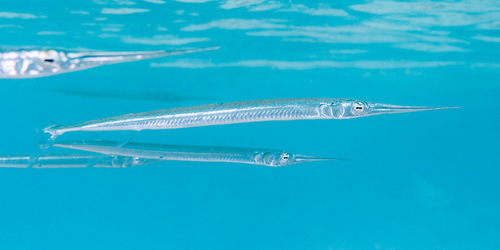
Keeltail Needlefish
Platybelone argalus
A shimmering arrow of the tropical shallows, the Keeltail Needlefish is a master of surface camouflage. Recognized by the unique 'keel' at its tail, this slender predator is a marvel of aquatic engineering.
Quick Identification
Size
Typically 30-40 cm (12-16 inches) in length, reaching a maximum of 50 cm (20 inches); weight is generally under 0.5 kg (1 lb).
Colors
Brilliant iridescent silver sides and belly with a dark bluish or greenish-blue back to blend with the ocean surface.
Key Features
- Distinct flattened lateral keel on the base of the tail
- Elongated beak-like jaws filled with fine, sharp teeth
- Extremely slender, cylindrical body
- Large eyes positioned for surface hunting
When You’ll See Them
Geographic range
Where Does the Keeltail Needlefish Live?
The Keeltail Needlefish is a circumtropical species, meaning it is found in warm waters across the globe. It is a native resident of the tropical Atlantic, including the Caribbean Sea and the Gulf of Mexico, and extends through the Indian and Pacific Oceans from East Africa to the Hawaiian Islands. While they are most concentrated in the belt between the Tropics of Cancer and Capricorn, they occasionally wander into subtropical zones during exceptionally warm summers.
Basemap © OpenStreetMap contributors
Behavior
The Keeltail Needlefish is a highly specialized surface-dweller, often seen skimming just beneath the water's interface. They are primarily solitary or found in small, loose groups, using their slender profiles and silver coloration to remain nearly invisible to both prey below and predators above. When threatened or pursuing prey, they are capable of incredible bursts of speed, sometimes leaping out of the water and skittering across the surface to evade capture.
These fish are most active during the day, though they are frequently attracted to artificial lights at night, which can lead to accidental 'flights' toward docks or boats. While generally wary of humans, they are a common sight for snorkelers and coastal residents, often staying just out of reach while maintaining a watchful eye on their surroundings.
EverydayEarth exclusive
Camera Tips
Capturing the Keeltail Needlefish requires a specialized approach since they reside at the very top of the water column. For those with coastal 'backyards' or docks, the best setup is a waterproof action camera mounted just 6-12 inches below the surface on a piling or a floating buoy. Angle the camera slightly upward to catch the silvery underbelly and the reflection of the sky, which highlights their sleek silhouette.
To attract them to your camera's field of view, use a submersible green LED light at night. These fish are naturally drawn to the small silversides and shrimp that congregate around artificial light sources. During the day, avoid using heavy bait, as it may attract larger predators that scare the needlefish away; instead, look for areas with natural current breaks where they like to hover and wait for passing prey.
Because they are extremely fast, set your camera to a high frame rate—at least 60fps—to capture their sudden strikes or leaps. If you are filming from above the water (e.g., from a pier), use a circular polarizing filter to cut through the surface glare, which otherwise obscures the fish's iridescent colors. Focus your camera on the transition zone between the reef edge and open water for the highest probability of a sighting.
Similar Species
Species that look similar or are commonly confused with Keeltail Needlefish.
Frequently Asked Questions
Record Keeltail Needlefish at your habitat
Connect a camera to start building your own species record — AI identifies every visitor automatically.