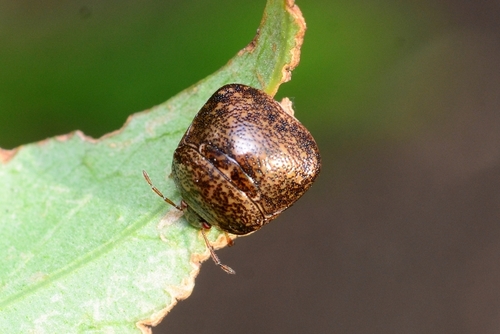
Kudzu Bug
Megacopta cribraria
An invasive visitor with a distinctive square shape and a potent scent, the Kudzu Bug is a fascinating example of insect adaptation. Keep an eye on your white garden fences—they might just be covered in these tiny, pea-sized travelers.
Quick Identification
Size
4 to 6 mm (0.16 to 0.24 inches) in length, roughly the size of a large pea.
Colors
Olive-green to brownish-tan body with darker brown punctations (pits) giving it a mottled appearance.
Key Features
- Square-ish, globular body shape
- Mottled olive-brown coloring
- Widened abdomen that covers most of the wings
- Strong, pungent odor when disturbed
When You’ll See Them
Behavior
The Kudzu Bug is a highly gregarious insect, often found in large clusters on its namesake vine or on light-colored structures. While they are relatively slow-moving, they are strong fliers. During the autumn months, they exhibit a unique 'homing' behavior toward light-colored surfaces, particularly white walls or vehicles, which can lead to large infestations around human dwellings. Unlike many other insects, they have a fascinating symbiotic relationship with gut bacteria, which females provide to their offspring in specialized packets laid alongside their eggs.
When threatened, these bugs deploy a potent defense mechanism: they release a pungent, foul-smelling chemical. This liquid is not only an olfactory deterrent but can also cause skin irritation or staining in humans. This chemical also serves as a congregation pheromone, signaling to other Kudzu Bugs that a location is safe or suitable for overwintering, often leading to massive groups huddled together for warmth in the cracks of buildings or under tree bark.
EverydayEarth exclusive
Camera Tips
Capturing the Kudzu Bug on an AI-powered backyard camera requires a focus on their unique attraction to high-reflectance surfaces. Because they are naturally drawn to the color white, placing a white board, a sheet of paper, or even a white plastic plate in a sunny area near legume plants is the most effective way to lure them into your camera's field of view. Position your camera about 10 to 15 inches away from the white surface to ensure the macro-focus or close-up lens can resolve their small, mottled features. Angle the camera slightly downward or use a side-profile mount to catch them as they land and crawl across the surface.
Since these bugs are quite small, standard motion-sensing settings on traditional trail cameras might not always trigger. If you are using a specialized AI wildlife camera, ensure it is set to 'Insect' or 'Macro' mode. Look for them specifically in the autumn when they are most mobile and looking for shelter. If you have kudzu vines or a vegetable garden with beans nearby, placing the camera directly facing the stems of these plants will provide great shots of their feeding behavior, as they tend to congregate in rows along the plant stems.
Lighting is the most critical factor for these mottled insects. They are most active in direct, bright sunlight, which helps highlight the metallic olive sheen of their bodies. Try to avoid placing the camera in deep shade, as the bugs will be less active and harder for the AI to identify. If you are using an EverydayEarth camera, the software should be able to distinguish their square-ish, globular profile from other common garden beetles once they are within a few inches of the lens. Early afternoon is the 'golden hour' for Kudzu Bug activity, as the warmth drives them to move and feed more frequently.
Similar Species
Species that look similar or are commonly confused with Kudzu Bug.
Frequently Asked Questions
Record Kudzu Bug at your habitat
Connect a camera to start building your own species record — AI identifies every visitor automatically.