lemondichina
Triphasia trifolia
A fragrant marvel of the tropical garden, the Lemondichina provides a vibrant splash of red berries and a sanctuary for backyard pollinators. Known for its citrus-scented flowers and defensive thorns, this hardy shrub is a favorite for wildlife enthusiasts looking to attract birds and bees.
Quick Identification
Size
Height of 1-3 meters (3.3-9.8 feet) with a spread of 1.5-2 meters (5-6.5 feet); berries are approximately 1-1.5 cm (0.4-0.6 inches) long.
Colors
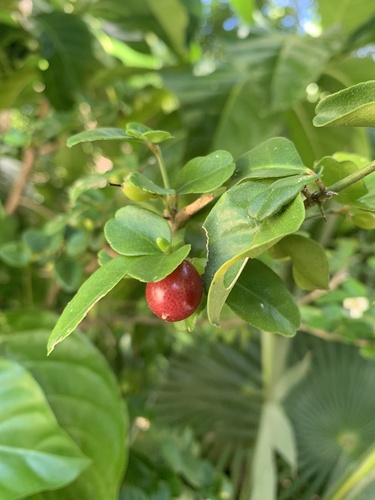
Glossy dark green foliage; bright white flowers; berries that ripen from green to orange and finally a deep crimson red.
Key Features
- Trifoliate leaves with three distinct leaflets
- Pairs of sharp, straight spines at the base of leaves
- Small, fragrant white flowers with three petals
- Resinous red berries containing 1-3 green seeds
When You’ll See Them
Geographic range
Where Does the lemondichina Live?
Originally native to the tropical regions of Southeast Asia, particularly the Indonesian archipelago and the Philippines, the Lemondichina has successfully spread across the globe. It is now widely established in the Caribbean, parts of South America, and the Pacific Islands. In the United States, it is a frequent sight in the coastal regions of Florida and Texas, where the subtropical climate allows it to thrive year-round.
Basemap © OpenStreetMap contributors
Behavior
The Lemondichina, or Limeberry, is a resilient evergreen shrub that serves as a cornerstone of many tropical backyard ecosystems. While it remains stationary, its life cycle is marked by constant interaction with surrounding fauna. It is a prolific bloomer, often producing flowers throughout the year in warmer climates. Its blossoms release a potent, citrus-like fragrance that is most intense in the early morning and late evening, specifically evolved to attract various pollinators like honeybees and specialized moths.
Beyond its reproductive cycle, the Lemondichina acts as a defensive fortress for small animals. Its dense growth habit and sharp axillary spines provide a protected nesting site for small birds and a safe haven for lizards from larger predators. The shrub is also a 'generous' neighbor; its sticky, sweet berries are a high-energy food source for various frugivorous birds, which in turn help the plant disperse its seeds across the landscape. To humans, it is a versatile garden inhabitant, often used as a formidable 'living fence' that is both beautiful and functional.
EverydayEarth exclusive
Camera Tips
To capture the best wildlife footage with your Lemondichina shrub, focus your camera on the 'action zones'—specifically clusters of ripening berries or fresh flowers. Because this plant is a primary food source, birds will often land on the outer branches to reach the fruit. Mount your camera on a nearby post or a sturdy branch about 3-4 feet away to capture the wide activity, or use a macro setting to get high-definition shots of bees and butterflies visiting the flowers.
Timing is everything when monitoring this species. The flowers often open after a significant rainfall, and the fragrance is strongest in the early morning. Setting your camera's trigger interval to be more sensitive during the hours of 6:00 AM to 9:00 AM will increase your chances of filming birds like bulbuls, mockingbirds, or catbirds as they feast on the crimson berries. If you have a time-lapse mode, use it to document the transition of the fruit from green to red over a 10-day period.
Be mindful of the shrub's thorns when placing your equipment. Use a flexible tripod or a dedicated tree mount to avoid damaging the plant's delicate bark, and ensure your camera is angled slightly upward to avoid the dark shadows cast by the dense foliage. If your camera has a high-quality infrared sensor, keep it active at night; you might catch glimpses of nocturnal visitors like fruit bats or small mammals that come to scavenge fallen berries from the ground beneath the bush.
Frequently Asked Questions
Record lemondichina at your habitat
Connect a camera to start building your own species record — AI identifies every visitor automatically.