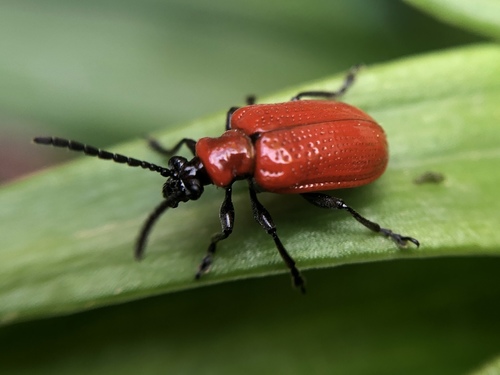
Lily Leaf Beetle
Lilioceris lilii
A brilliant scarlet gem of the garden, the Lily Leaf Beetle is as beautiful as it is destructive to prize-winning lilies. This Eurasian native has become a common sight for backyard observers across the Northern Hemisphere.
Quick Identification
Size
6 to 9 mm (0.25 to 0.35 inches) in length
Colors
Brilliant scarlet-red wing covers (elytra) and thorax; head, antennae, and legs are solid black
Key Features
- Striking scarlet red body with starkly contrasting black head and legs
- Rectangular or quadrangular body shape
- Distinctive pitted texture on the wing covers
- Ability to produce a faint squeaking sound when threatened
When You’ll See Them
Geographic range
Where Does the Lily Leaf Beetle Live?
The Lily Leaf Beetle is native to the temperate regions of Eurasia, stretching from Europe across Russia to North Africa. Since the mid-20th century, it has become a successful invasive species in North America, first establishing itself in Canada before spreading through the Northeast and Midwest United States. It is now commonly found in almost any temperate region where its favorite host plants, lilies and fritillaries, are cultivated in residential or commercial gardens.
Basemap © OpenStreetMap contributors
Behavior
Perhaps the most fascinating, if unappealing, behavior is found in the larval stage. To protect themselves from predators like birds and wasps, the larvae cover their bodies in their own sticky excrement. This 'fecal shield' acts as both a physical barrier and a chemical deterrent. These beetles are generally solitary but can be found in high densities on a single host plant if the infestation is significant.
EverydayEarth exclusive
Camera Tips
To capture clear footage of Lily Leaf Beetles, you need a camera setup capable of macro photography. Because these beetles are less than a centimeter long, a standard trail camera will likely produce blurry results if placed too far away. Use a camera with a close-focus lens or a dedicated macro mode, and mount it just 4 to 6 inches away from the foliage of a lily plant. Using a garden stake or a small tripod will help stabilize the camera at the exact height of the leaves.
Focus your efforts on the underside of the leaves during the late morning. This is when the beetles are most active, and it is also where you will find them laying rows of tiny orange eggs. Lighting is your best friend here; the bright scarlet red of the beetle pops beautifully against green foliage, but direct, harsh sunlight can cause 'blown-out' highlights on their shiny wing covers. Dappled shade or an overcast day provides the most even lighting for capturing their vibrant color.
If your AI camera supports time-lapse, set it to trigger every 15-30 seconds rather than relying on motion detection. Small insects often don't have enough mass to trigger standard PIR (passive infrared) sensors. By using time-lapse, you can create a fascinating video of the beetles moving through the garden or watch the larvae as they feed on the leaves over several hours. Ensure the area behind the plant is clear of tall grass that might blow in the wind and trigger false captures.
Frequently Asked Questions
Record Lily Leaf Beetle at your habitat
Connect a camera to start building your own species record — AI identifies every visitor automatically.