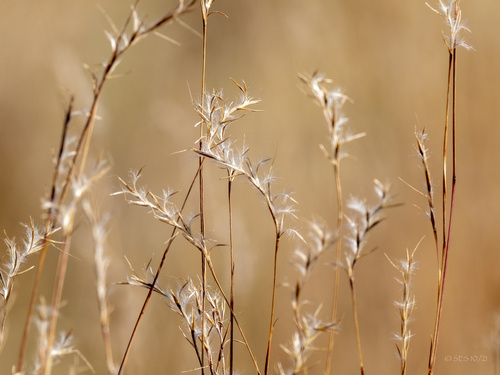
little bluestem
Schizachyrium scoparium
The backbone of the American prairie, little bluestem is a stunning bunchgrass that provides four-season beauty and a vital sanctuary for backyard birds and butterflies.
Quick Identification
Size
Typically grows 1.5 to 3 feet (45–90 cm) tall in a bunching habit, with flower spikes reaching up to 5 feet (1.5 m) in late summer.
Colors
Blue-green to grayish-green stems in spring; transitions to mahogany, copper, and bronze-orange in autumn with silvery-white seed heads.
Key Features
- Distinctive clump-forming bunchgrass growth
- Flattened, bluish-colored stem bases
- Fluffy, white, feathery seed clusters appearing in late summer
- Deep bronze-red foliage that persists throughout winter
When You’ll See Them
Behavior
Little bluestem is a resilient perennial bunchgrass that serves as a cornerstone of the North American prairie ecosystem. Unlike turf grasses that spread via underground runners, it grows in tight, upright clumps. This growth habit is particularly beneficial for wildlife, as it creates a network of open 'lanes' at ground level, allowing small mammals and ground-nesting birds like northern bobwhites to move freely while remaining hidden from overhead predators.
As a warm-season grass, little bluestem remains dormant in early spring, beginning its most vigorous growth during the heat of midsummer. Throughout the year, it acts as a dynamic host for biodiversity; it is the primary larval food source for several species of skipper butterflies. In the winter, the dried stalks remain remarkably sturdy, providing essential vertical structure in the landscape that offers thermal cover and a high-energy seed source for overwintering songbirds.
EverydayEarth exclusive
Camera Tips
To capture the best images of little bluestem, position your camera at a low 'worm's-eye' angle, roughly 12 to 18 inches off the ground. This perspective emphasizes the grass's unique bunching architecture and makes the plant appear majestic against the sky. For the most dramatic visual results, face your camera toward the west or southwest. The low-angled 'golden hour' sun in the late afternoon will back-light the silvery seed heads, creating a glowing 'halo' effect and making the coppery fall foliage appear to burn with internal light.
While the grass itself is stationary, it is a high-traffic hub for wildlife that your AI camera can capture. Set your camera to 'Hybrid' or 'Video' mode with a high sensitivity setting to catch the quick movements of small birds like American Goldfinches or Dark-eyed Juncos as they cling to the stalks to harvest seeds. Because little bluestem is also a host plant for butterflies, a camera with a macro or close-focus capability placed near the foliage in midsummer can capture rare footage of skipper caterpillars or emerging adults.
In the winter months, little bluestem provides incredible contrast against snow, which helps the AI differentiate between the plant and visiting animals. This is the best time to monitor the base of the clumps, where small mammals often seek shelter. To avoid 'false triggers' caused by the grass swaying in the wind, adjust your camera's PIR sensitivity or use the 'Zone Masking' feature to ignore the very top of the stems where motion is most frequent. A 'Burst Mode' of 3-5 photos is highly recommended to ensure you get a sharp image during breezy conditions.
Similar Species
Species that look similar or are commonly confused with little bluestem.
Frequently Asked Questions
Record little bluestem at your habitat
Connect a camera to start building your own species record — AI identifies every visitor automatically.