Little Brown Jugs
Asarum arifolium
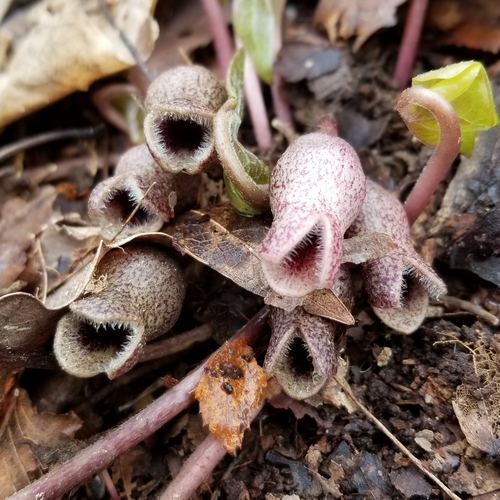
A hidden gem of the forest floor, Little Brown Jugs features striking mottled leaves and mysterious flowers that hide in the leaf litter. This evergreen beauty is a must-see for any backyard naturalist exploring the shade.
Quick Identification
Size
Height: 4-8 inches (10-20 cm); Leaf length: 3-6 inches (7.5-15 cm)
Colors
Dark green heart-shaped or arrow-shaped leaves with distinct silver-grey mottling; flowers are a fleshy, brownish-purple or maroon.
Key Features
- Arrow-shaped, evergreen leaves with silver marbling
- Jug-shaped flowers hidden at the soil line
- Foliage smells like ginger or spicy anise when crushed
- Low-growing, clumping habit in shaded areas
When You’ll See Them
Behavior
Little Brown Jugs is a quiet, slow-growing perennial that serves as one of the most charismatic groundcovers of the southeastern United States. Unlike many other woodland plants that disappear in winter, this species is evergreen, holding its beautifully patterned leaves throughout the year. It spreads via underground rhizomes, forming small, localized colonies that stabilize the soil in shady ravines and deciduous forests.
The most fascinating aspect of this plant's biology is its pollination strategy. It produces thick, leathery flowers that look like tiny ceramic jugs tucked away beneath the leaf litter at the very base of the plant. Because the flowers are so close to the ground, they are primarily visited by crawling insects like beetles and ants rather than bees or butterflies. This unique 'hidden' blooming habit makes the plant a favorite for nature enthusiasts who enjoy the hunt for subtle forest details.
EverydayEarth exclusive
Camera Tips
Capturing Little Brown Jugs on camera requires a specialized 'ground-up' approach. Because the namesake 'jugs' (the flowers) grow directly on the soil surface, you must mount your camera at the lowest possible angle. Use a flexible tripod or a beanbag mount to get the lens flush with the ground. To get a clear shot of the flower's interior, you may need to gently brush away fallen leaves, but be careful not to disturb the plant's delicate root system.
Lighting is your biggest challenge in the deep forest shade where these plants thrive. Avoid using a direct, harsh flash, which can wash out the intricate silver mottling on the leaves. Instead, try to capture images on a bright, overcast day or use a small LED light panel at a side angle to create soft shadows that highlight the leathery texture of the jug-shaped blooms. This side-lighting will make the flower appear more three-dimensional on camera.
For those using AI-powered trail cameras or time-lapse settings, focus on a healthy clump in early spring. While the plant itself won't move much, a time-lapse can capture the 'hidden' world of the forest floor, documenting the various beetles, ants, and other ground-dwelling insects that crawl into the flowers to pollinate them. This is a fantastic way to record ecological interactions that are normally invisible to the naked eye.
Finally, don't ignore Little Brown Jugs during the winter months. When the rest of the forest floor is brown and dormant, the silver-patterned leaves of this species stand out vividly. If you have a light dusting of snow, the contrast between the green/silver leaves and the white snow makes for some of the most striking botanical photography possible in a backyard woodland setting.
Frequently Asked Questions
Record Little Brown Jugs at your habitat
Connect a camera to start building your own species record — AI identifies every visitor automatically.