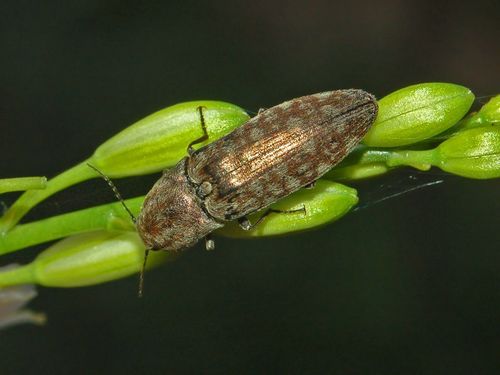
marsh click beetle
Actenicerus siaelandicus
A metallic marvel of the wetlands, the marsh click beetle is an aerial acrobat with a built-in spring mechanism. Watch for its coppery shimmer in damp meadows during the height of spring.
Quick Identification
Size
10 to 17 mm (0.4 to 0.67 inches) in length
Colors
Metallic purplish-bronze or coppery sheen; mottled appearance created by fine greyish-yellow hairs (pubescence)
Key Features
- Strong clicking mechanism between the thorax and abdomen
- Long, sharply pointed hind angles on the pronotum
- Strongly pectinate (comb-like) antennae in males
- Densely punctured, metallic-looking elytra
When You’ll See Them
Geographic range
Where Does the marsh click beetle Live?
The marsh click beetle is a classic Palearctic species, native to the temperate regions of Europe and Northern Asia. Its range spans from the British Isles and Scandinavia across Central and Eastern Europe, extending through the vast landscapes of Russia and reaching as far east as Japan. It thrives in cool, moist climates where permanent wetlands and undisturbed boggy soils are prevalent.
Basemap © OpenStreetMap contributors
Behavior
The marsh click beetle is best known for its fascinating defense mechanism. When threatened or flipped onto its back, it uses a specialized peg-and-groove system on its underside to create a violent 'click' sound. This action launches the beetle several inches into the air, allowing it to right itself or startle a potential predator. It is a startlingly effective acrobatic feat for such a small creature.
These beetles are primarily diurnal, meaning they are active during the daylight hours. During the late spring and early summer, they can be seen crawling through tall grasses or taking short, low-altitude flights across damp meadows. While they are generally solitary, you may find several individuals in close proximity if the habitat conditions—specifically soil moisture—are ideal for their development.
EverydayEarth exclusive
Camera Tips
Capturing the marsh click beetle requires a specialized approach because of its small size and specific habitat. Place your camera near the ground in boggy areas or damp meadows, focusing on tall grasses or the flower heads of umbellifers (like wild carrot or cow parsley) where adults often congregate to feed. A macro lens or a camera with a very short minimum focus distance is essential for getting a clear shot of their metallic textures.
Because these beetles are most active during the warmest parts of the day, ensure your camera is positioned to handle bright, direct sunlight without blowing out the highlights on their reflective, metallic wing cases. A slight downward angle can help highlight the distinctive 'shoulders' and the pointed hind angles of the pronotum, which are key for identification.
If you are using an AI-powered camera, set it to a high-speed shutter mode. The 'click' and subsequent jump happen in a fraction of a second; to catch one mid-air or mid-flip, you'll need a trigger speed of at least 1/2000th of a second. Look for them specifically after a light rain when the sun comes out, as the humidity draws them to the tops of vegetation.
Frequently Asked Questions
Record marsh click beetle at your habitat
Connect a camera to start building your own species record — AI identifies every visitor automatically.