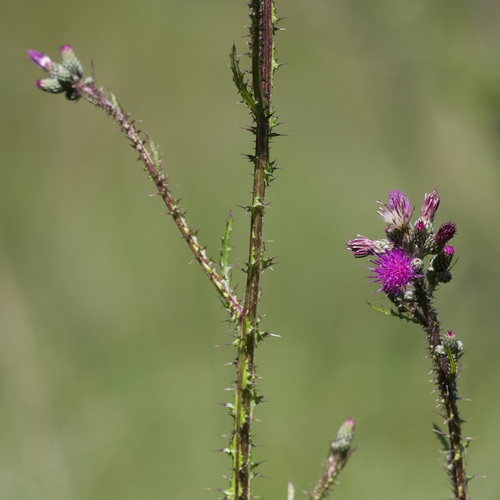
Marsh Thistle
Cirsium palustre
A towering presence in damp meadows, the Marsh Thistle is a biennial wonder that supports a hidden world of pollinators. With its spiny stems and vibrant purple clusters, it is a striking architectural addition to any wetland landscape.
Quick Identification
Size
Height: 0.5–2.0 meters (1.6–6.6 feet); Flower heads: 10–15 mm (0.4–0.6 inches) wide
Colors
Deep purple to magenta flower clusters; dark green to brownish-green stems and foliage
Key Features
- Spiny wings running the full length of the stem
- Small, clustered flower heads at the top of the stalk
- Narrow, deeply lobed leaves with sharp prickles
- Tall, slender biennial growth habit
When You’ll See Them
Geographic range
Where Does the Marsh Thistle Live?
Originally hailing from the temperate regions of Europe and Northern Asia, the Marsh Thistle is a master of moist environments. It has since crossed the ocean, becoming a common sight in the northern United States and Canada, particularly favoring the humid climates surrounding the Great Lakes. This hardy plant is most at home in water-logged soils, often found lining the edges of marshes, damp meadows, and forest clearings where sunlight and moisture are abundant.
Basemap © OpenStreetMap contributors
Behavior
The Marsh Thistle is a biennial plant, meaning it operates on a two-year life cycle. In its first year, it remains low to the ground as a basal rosette of spiny leaves, quietly gathering energy and establishing a deep root system. During its second year, it undergoes a dramatic transformation, sending up a tall, slender, and heavily armed flowering spike that can tower over surrounding vegetation. This growth strategy allows it to compete for sunlight in crowded wetland habitats before finally producing its seeds and completing its life cycle.
This species is a vital resource for local wildlife, particularly in mid-to-late summer. Its flowers are rich in nectar, making them a magnet for long-tongued insects like bumblebees and clearwing moths. Once the flowering stage concludes, the plant produces fluffy, wind-borne seeds that are a favorite food source for goldfinches and other small seed-eating birds. While humans often view it as a prickly nuisance or an invasive weed, its role in supporting the base of the food chain in damp ecosystems is significant.
EverydayEarth exclusive
Camera Tips
To capture the Marsh Thistle effectively, your AI-powered camera should be positioned approximately 3 to 5 feet off the ground, aiming slightly downward to capture the clusters of flower heads at the top of the tall stems. Because this plant can reach heights of 6 feet, a vertical orientation or a wide-angle lens is ideal for showing the full scale of its biennial growth. Since the plant itself is stationary, the primary goal is often to capture the myriad of pollinators it attracts, such as bumblebees, butterflies, and even hummingbirds.
For the best results, use a time-lapse setting rather than a motion-triggered one if your camera supports it. A shot every 15 minutes during the peak blooming months of July and August can reveal the fascinating process of the flower heads opening and closing. If you are using motion triggers, set the sensitivity to high, as the movement of visiting insects or the swaying of the thistle in a light breeze can provide excellent dynamic footage. To avoid false triggers from the wind, try to position the camera so the thistle has a solid, darker background like a forest edge, which also helps the purple flowers pop in the frame.
Lighting is crucial for this species; the morning sun between 8 AM and 11 AM provides a soft glow that highlights the delicate, spiny 'wings' on the stems without washing out the deep purple of the blossoms. Avoid using a heavy flash at night, as it can overexpose the reflective spines. Instead, rely on natural light to showcase the architectural beauty of the plant. If your backyard setup allows, place a small water feature nearby to increase the variety of wildlife that might stop at the thistle for a snack, turning your camera into a hub of biodiversity.
Similar Species
Species that look similar or are commonly confused with Marsh Thistle.
Frequently Asked Questions
Record Marsh Thistle at your habitat
Connect a camera to start building your own species record — AI identifies every visitor automatically.