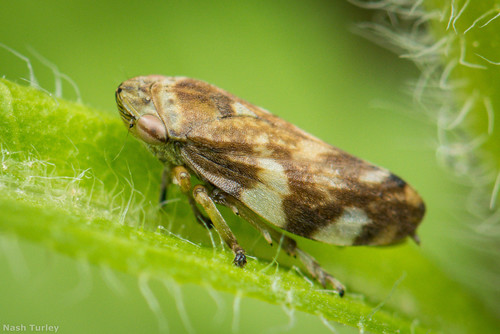
Meadow Spittlebug
Philaenus spumarius
A master of physics and foam, the Meadow Spittlebug is famous for its bubbly 'cuckoo spit' nurseries and record-breaking jumps. This tiny garden inhabitant is a marvel of the insect world, hiding in plain sight on stems and leaves.
Quick Identification
Size
Adults range from 5-7 mm (0.2 to 0.28 inches) in length; nymphs are smaller and typically hidden from view.
Colors
Highly variable; patterns include mottled brown, tan, straw-yellow, and occasionally nearly solid black or striped variations.
Key Features
- Broad, blunt head resembling a tiny frog face
- Strongly thickened hind legs for jumping
- Adults hold wings in a roof-like shape over the body
- Nymphs produce a distinct white, frothy 'spittle' mass
When You’ll See Them
Behavior
The Meadow Spittlebug is most famous for its juvenile stage, during which the nymph produces a bubbly, white foam known colloquially as 'cuckoo spit.' This foam is created by the insect excreting a fluid and pumping its body to whip in air. This 'bubble bath' serves as a multi-purpose fortress: it keeps the soft-bodied nymph moist, insulates it from temperature swings, and hides it from predators like birds and spiders.
As adults, they transition into 'froghoppers,' becoming some of the most impressive jumpers in the animal kingdom. They can leap over 70 centimeters into the air—an acceleration that exerts force hundreds of times greater than gravity. While they are capable of flight, they often prefer to jump or walk sideways when disturbed on a leaf or stem.
EverydayEarth exclusive
Camera Tips
Photographing the Meadow Spittlebug requires a specialized macro approach because of their diminutive size. Standard trail cameras usually have a minimum focus distance of several feet, which is too far for an insect that is only 6mm long. For the best results, use a camera with a dedicated macro lens or a close-up attachment, and set your focus point manually on a plant stem where you have already spotted 'spittle' foam. Position the lens about 4 to 10 inches from the plant to capture the intricate detail of the bubbles and the nymph hiding within.
To capture the adults (the froghoppers), you need a camera with an extremely fast shutter speed or a high-speed trigger. Since they are incredibly reactive, any vibration may cause them to jump out of the frame. Use a tripod to keep your frame steady and aim for a side-profile shot to highlight their unique 'froglike' head and powerful hind legs. Soft, indirect morning light is ideal, as it prevents the highlights on their glossy wings from blowing out while providing enough illumination to keep your shutter speed high.
If you are using an AI-powered camera to monitor garden wildlife, place it near host plants like lavender, rosemary, or tall grasses. Look for the white foam masses in late spring—these are 'hotspots' for activity. By focusing on these stationary foam clumps, you are much more likely to catch the adult emerging or the nymph moving. For a unique shot, try backlighting the spittle mass; the sun shining through the bubbles creates a beautiful, translucent effect that looks stunning on camera.
Frequently Asked Questions
Record Meadow Spittlebug at your habitat
Connect a camera to start building your own species record — AI identifies every visitor automatically.