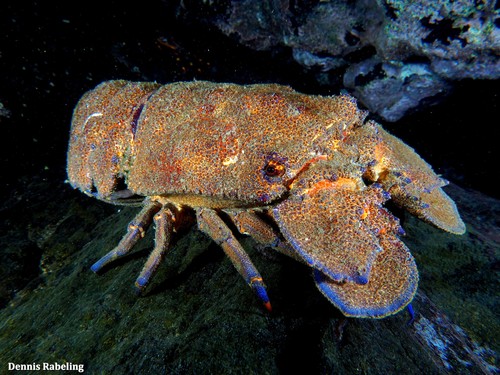
Mediterranean Slipper Lobster
Scyllarides latus
Meet the 'Gentle Giant' of the Mediterranean reefs. Lacking claws and covered in stone-like armor, this nocturnal master of camouflage is one of the ocean's most elusive and fascinating crustaceans.
Quick Identification
Size
Typically 20–30 cm (8–12 in) in length, weighing up to 2 kg (4.4 lbs)
Colors
Mottled reddish-brown, tan, and grey carapace that mimics the texture of seafloor rocks
Key Features
- Flattened shovel-like antennae instead of long whips
- Complete lack of claws or pincers
- Heavy, square-shaped carapace with a bumpy stone-like texture
- Stocky, powerful legs used for clinging to rocks
When You’ll See Them
Geographic range
Where Does the Mediterranean Slipper Lobster Live?
Where Does the Mediterranean Slipper Lobster Live? This fascinating crustacean is native to the warm temperate and subtropical waters of the Mediterranean Sea and the eastern Atlantic Ocean. Its range extends from the coast of Portugal southward to the Cape Verde islands, including the volcanic archipelagos of the Azores, Madeira, and the Canary Islands. While it was once a common sight across the entire Mediterranean basin, its core populations are now most frequently found in protected marine reserves and deeper, rocky habitats along the coasts of Italy, Greece, and Spain.
Basemap © OpenStreetMap contributors
Behavior
The Mediterranean Slipper Lobster is a master of stealth and a true creature of the night. During the day, these lobsters are nearly impossible to find, as they retreat into the deepest recesses of underwater caves or tuck themselves into narrow rocky crevices. Unlike their more aggressive cousins, the spiny lobsters, slipper lobsters lack long antennae and sharp spines for defense, relying instead on their incredible camouflage and heavy, armor-like shell to remain undetected by predators.
As night falls, they emerge from their shelters to forage across the benthos. They are solitary hunters, moving slowly and methodically over the seabed. While they appear sluggish, they are remarkably strong; they use their powerful legs to grip rocks or pry open prey. They have a relatively peaceful interaction with their own kind, though they are highly sensitive to light and movement, quickly retreating if they feel threatened by a diver or a larger fish.
EverydayEarth exclusive
Camera Tips
To capture the Mediterranean Slipper Lobster on an underwater camera, placement is everything. You should aim for the 'mouth' of a rocky crevice or the entrance of a shallow sea cave, as these lobsters often follow the same paths when emerging for their nightly forage. Use a weighted mount or a tripod specifically designed for marine environments to ensure the camera doesn't shift with the tide or current. Positioning the lens about 30-50 cm from the cave floor at a slightly upward angle will provide the best view of their unique, shovel-like antennae.
Lighting is a critical factor for this species. Because they are highly light-sensitive, a standard white-light flash or bright LED will likely cause them to retreat back into their holes immediately. Instead, use a camera equipped with red-light LEDs or a red filter. Crustaceans have a limited ability to see red light, allowing you to record their natural foraging behavior without startling them. If your camera has a time-lapse mode, set it to trigger every 30 seconds during the peak activity hours between 10 PM and 3 AM.
While we don't recommend heavy baiting which can disrupt the local ecosystem, placing a crushed mollusc or a piece of sea urchin near the camera site can serve as a natural lure to keep the lobster in the frame longer. Be mindful of the season; in the Mediterranean, these lobsters tend to move into shallower, warmer waters during the summer months (June to August), making this the ideal time for shore-based camera deployments or shallow-water housing setups.
Frequently Asked Questions
Record Mediterranean Slipper Lobster at your habitat
Connect a camera to start building your own species record — AI identifies every visitor automatically.