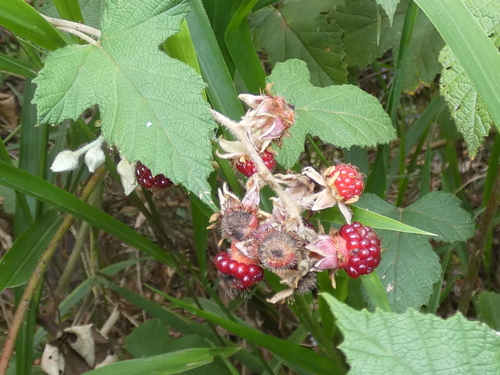
Molucca Bramble
Rubus moluccanus
A vibrant, scrambling native raspberry that provides a thorny sanctuary for backyard wildlife. With its velvety leaves and ruby-red fruit, the Molucca Bramble is a powerhouse for attracting birds and pollinators alike.
Quick Identification
Size
Scrambling shrub reaching 2–6 meters (6–20 feet) in length; leaves 2–15 cm (0.8–6 in) long.
Colors
Dark green upper leaves with rusty-brown hairy undersides; white or pink flowers; bright scarlet fruit.
Key Features
- Simple leaves with 3–5 shallow lobes and a velvety, hairy texture beneath
- Stems covered in fine, rusty-colored hairs and small hooked prickles
- Bright red aggregate berries approximately 1.2 cm in diameter
When You’ll See Them
Behavior
During the flowering and fruiting season, this plant becomes a hub of biological activity. The blooms attract a variety of pollinators, including native bees and butterflies, while the ripening red berries are a high-energy magnet for fruit-eating birds and terrestrial mammals. Its presence in a backyard or woodland area significantly boosts local biodiversity by offering both a consistent food source and a thorny fortress for vulnerable species.
EverydayEarth exclusive
Camera Tips
To capture the best action on your AI-powered camera, treat the Molucca Bramble as a natural 'wildlife bait station.' Instead of placing the camera directly inside the bramble, mount it 3–5 feet away on a stable post or nearby tree. Aim the lens at a cluster of ripening berries or a particularly dense patch of flowers. Because this plant attracts everything from small honeyeaters to larger mammals like wallabies or possums, set your camera at a mid-range height—about 2–3 feet off the ground—with a slight downward tilt to catch both ground-dwelling foragers and low-flying birds.
Lighting is crucial for capturing the vibrant red of the berries and the intricate texture of the leaves. Position your camera facing south (if in the Southern Hemisphere) to avoid direct lens flare during the day. If your camera allows for focal adjustments, try to frame the shot so the foreground berries are in sharp focus. Be mindful of the PIR sensor; given the density of the foliage, ensure there are no stray leaves directly in front of the lens, as wind-blown branches are the most common cause of 'false triggers' when filming brambles.
For those looking to document the fruit-eating behavior of nocturnal animals like fruit bats or brushtail possums, ensure your camera's infrared (IR) flash is set to 'Medium' intensity to avoid 'blowing out' the reflective surfaces of the waxy leaves. The best time for recording high-energy bird activity is typically early morning between 6 AM and 9 AM when the dew is still on the leaves, while mammals will most likely appear in your footage just after dusk as they emerge to feed on the ripe fruit.
Frequently Asked Questions
Record Molucca Bramble at your habitat
Connect a camera to start building your own species record — AI identifies every visitor automatically.