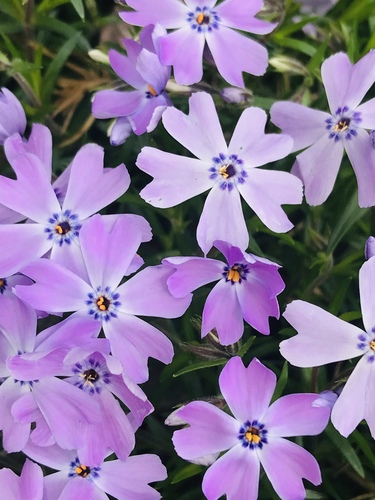
moss phlox
Phlox subulata
A vibrant, low-growing perennial that transforms rocky slopes into a carpet of brilliant color every spring. Moss phlox is the ultimate early-season signal for pollinators and backyard photographers alike.
Quick Identification
Size
3-6 inches (7.5-15 cm) in height; spreading 12-24 inches (30-61 cm) in width
Colors
Masses of small flowers in shades of pink, lavender, vibrant purple, or white; needle-like dark green foliage
Key Features
- Prostrate, mat-forming growth habit
- Needle-like, semi-evergreen leaves
- Five-petaled flowers often with a notched tip
- Dense bloom coverage that hides the foliage completely in spring
When You’ll See Them
Behavior
Moss phlox is a hardy, long-lived perennial that functions as a vibrant living carpet. Unlike many garden flowers that grow upright, this species spreads horizontally across the ground, with its stems taking root wherever they touch the soil. This behavior allows it to colonize rocky slopes and garden edges, effectively suppressing weeds and preventing soil erosion.
During the early spring, the plant undergoes a dramatic transformation, shifting from a prickly green mound to a solid block of color. This mass-flowering strategy is designed to attract early-season pollinators, particularly long-tongued insects like butterflies and clearwing moths. While it is tough enough to withstand light foot traffic, it is primarily a decorative groundcover that provides essential nectar during the transition from winter to spring.
EverydayEarth exclusive
Camera Tips
Capturing the beauty of moss phlox requires a different approach than photographing mobile wildlife. To get the best results with your backyard camera, mount the device on a ground-level stake or a low-profile tripod. The camera lens should be positioned between 6 to 12 inches from the ground. A slight downward angle of 30 to 45 degrees is ideal for capturing the 'carpet' effect, while a perfectly horizontal 'worm's-eye view' can create stunning, immersive shots of individual blooms against the horizon.
Because moss phlox is a magnet for early spring pollinators, use your camera’s high-sensitivity trigger settings. You aren't just filming the plant; you are waiting for the movement of Swallowtail butterflies, Bumblebees, and the elusive Hummingbird Clearwing moth. Position your camera so the sun is behind it or to the side to avoid washing out the delicate pink and lavender hues. Mid-morning light is particularly effective as it captures the flowers fully open and the insects at their most active.
One of the most rewarding ways to document moss phlox is through time-lapse photography. Set your camera to take a photo every 30 to 60 minutes over the course of two weeks in early spring. This will allow you to watch the 'bloom explosion' as the green mat disappears under a sea of color. If your camera allows for focal adjustments, ensure the focus is locked on the foreground blooms to prevent the AI from tracking swaying trees in the background. No bait is needed—the nectar-rich blossoms are the natural lure for the most colorful insects in your neighborhood.
Similar Species
Species that look similar or are commonly confused with moss phlox.
Frequently Asked Questions
Record moss phlox at your habitat
Connect a camera to start building your own species record — AI identifies every visitor automatically.