Mule Deer
Odocoileus hemionus
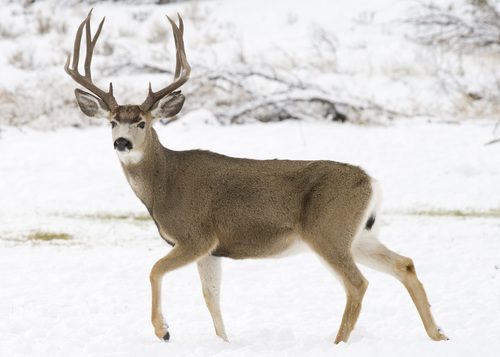
Recognizable by their namesake ears and rugged grace, Mule Deer are the iconic sentinels of the American West. From high mountain peaks to suburban backyards, these adaptable browsers bring a touch of wild wilderness to any camera lens.
Quick Identification
Size
Length of 1.2–2.1 m (4–7 ft); shoulder height of 80–105 cm (31–41 in); weight between 45–150 kg (100–330 lbs)
Colors
Brownish-gray in winter and reddish-brown in summer; white rump patch and a white tail with a distinct black tip
Key Features
- Extraordinarily large ears resembling those of a mule
- Antlers that fork or 'bifurcate' as they grow (dichotomous branching)
- White rump patch with a small, rope-like black-tipped tail
- Stiff-legged bounding gait known as 'stotting'
When You’ll See Them
Sightings on EverydayEarth
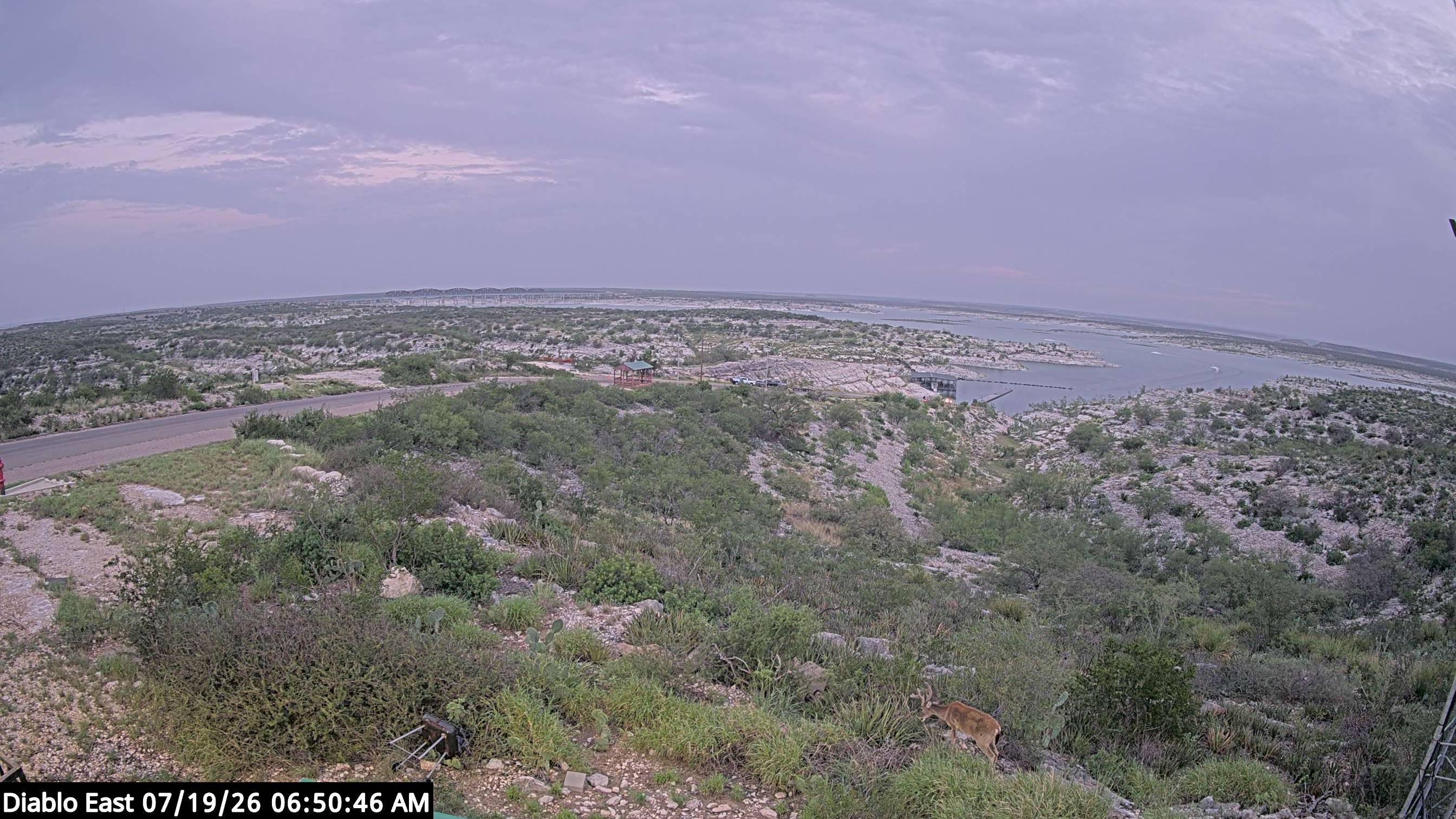
Jul 19, 2026
A male Mule Deer is foraging among the scrub and cacti in the foreground, with the Diablo East boat ramp and Amistad Reservoir visible in the distance. The buck has a healthy summer coat and its antlers are currently covered in velvet.
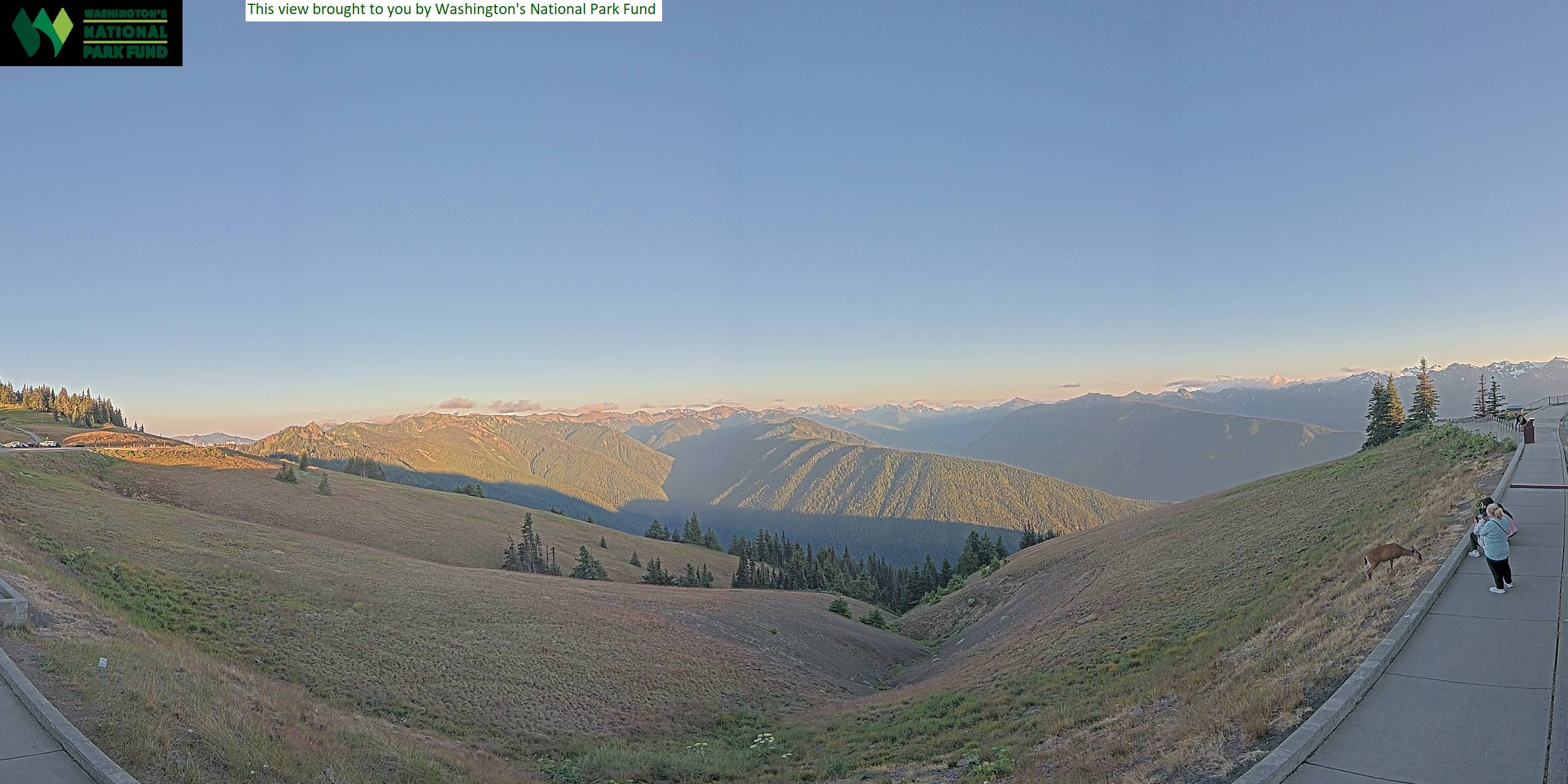
Jul 18, 2026
A Mule Deer is seen foraging on the grassy hillside adjacent to a paved walkway. A visitor is also visible on the path, enjoying the expansive view of the Olympic Mountains under the warm light of the late afternoon sun.
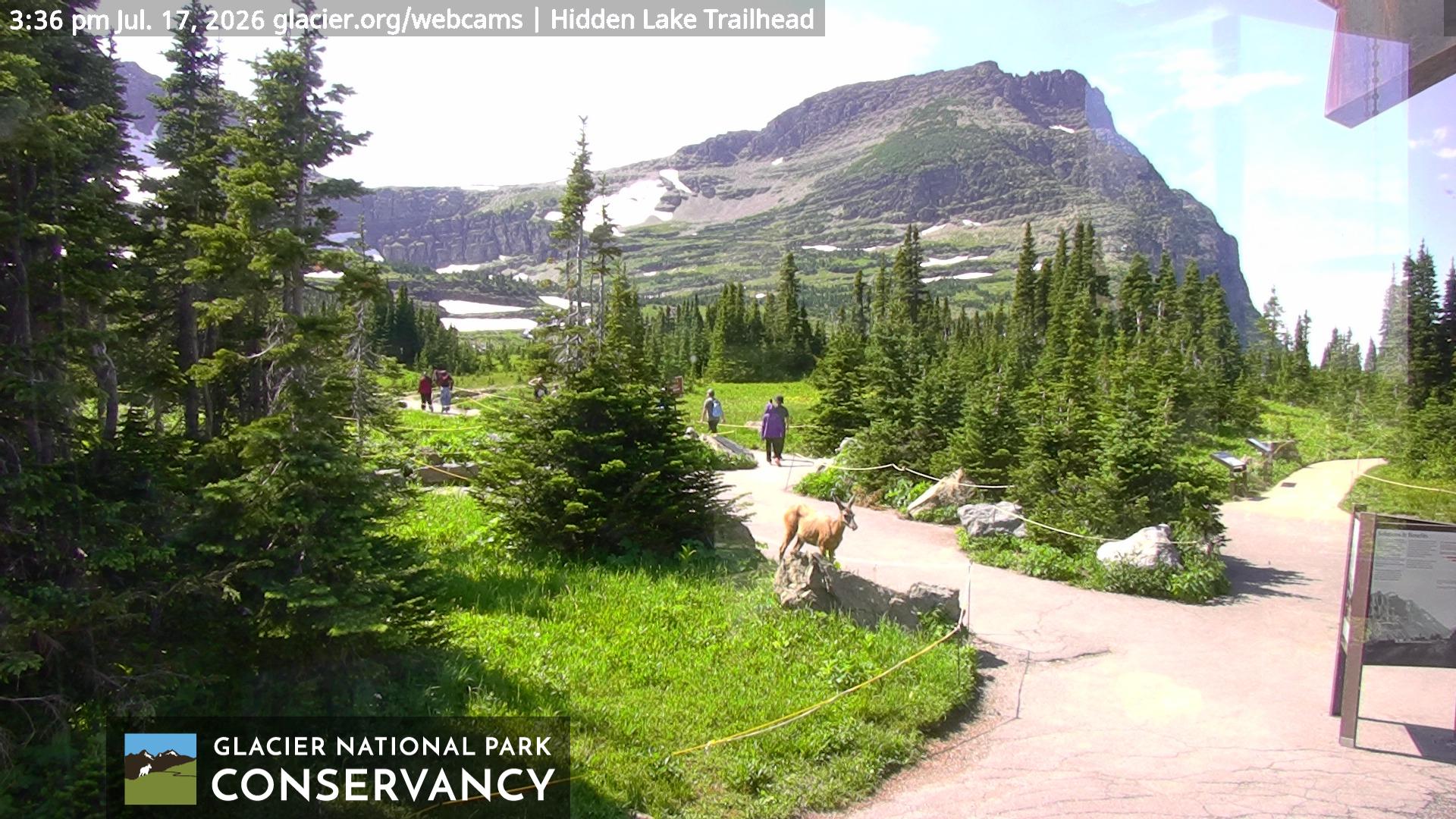
Jul 17, 2026
A Mule Deer stands alert on a rock outcrop directly beside the Hidden Lake Trail. In the background, several hikers are visible on the path, illustrating the frequent proximity of wildlife to visitors at Logan Pass.
Jul 9, 2026
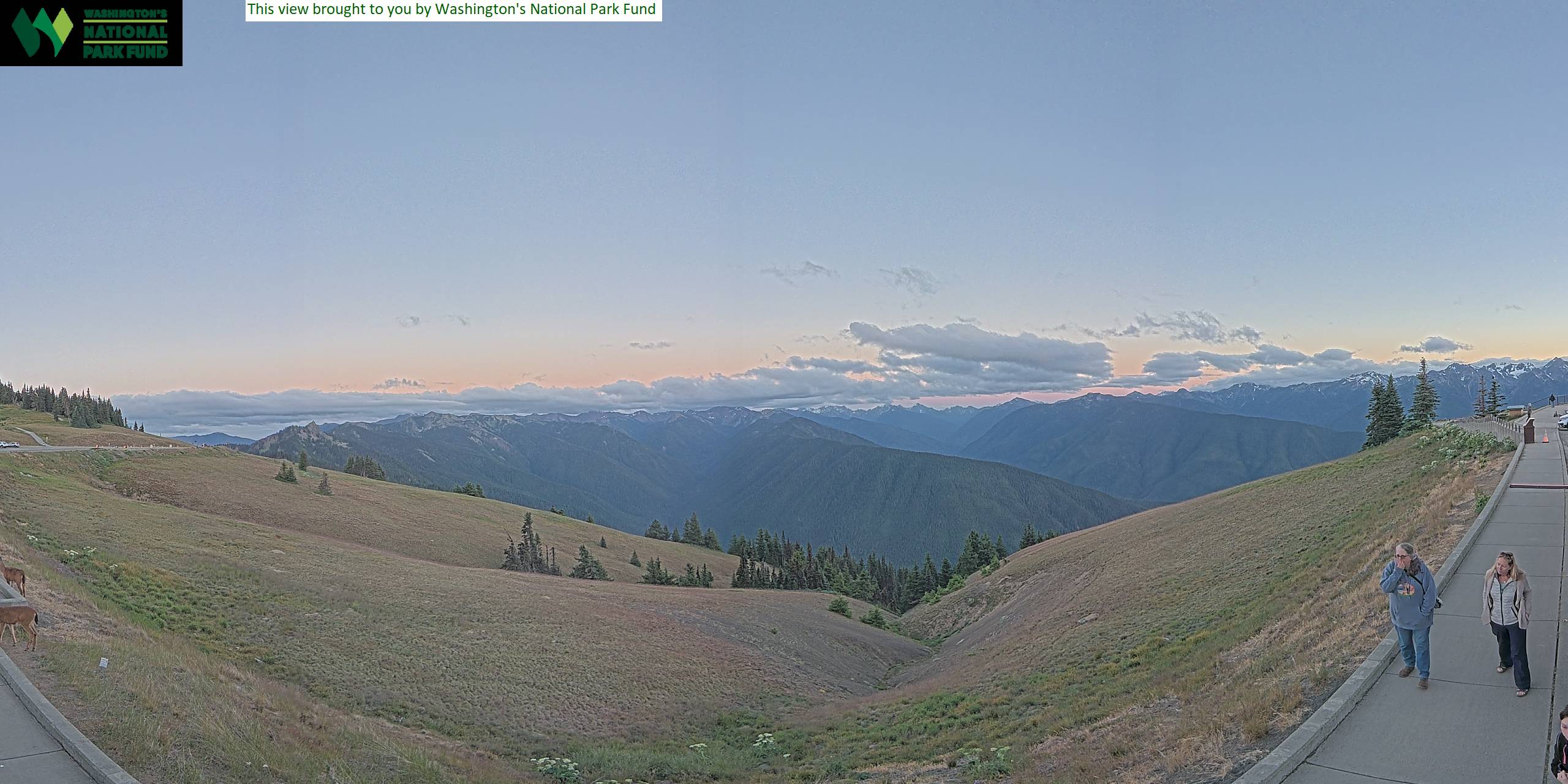
Two Mule Deer are seen at the far left edge of the frame, grazing on the subalpine hillside. In the distance to the right, visitors are walking along the paved ridge-top trail as the sun sets over the Olympic Mountains.
Jul 9, 2026
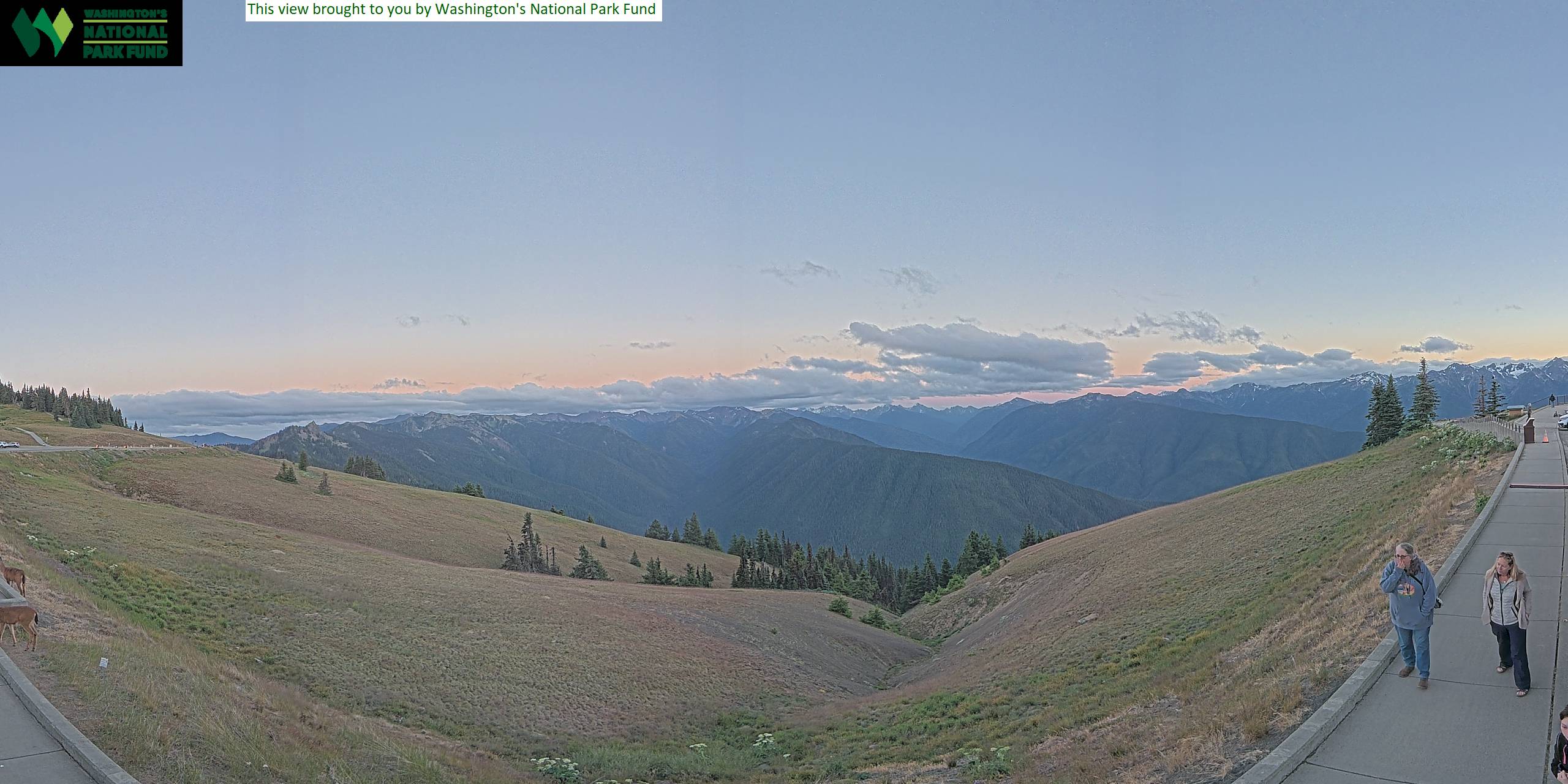
A Mule Deer is partially visible on the far left edge of the frame, foraging in the alpine meadow. On the right side of the scene, two people are walking along the paved ridge path. The Olympic Mountains are visible in the background under a twilight sky.
Jul 4, 2026
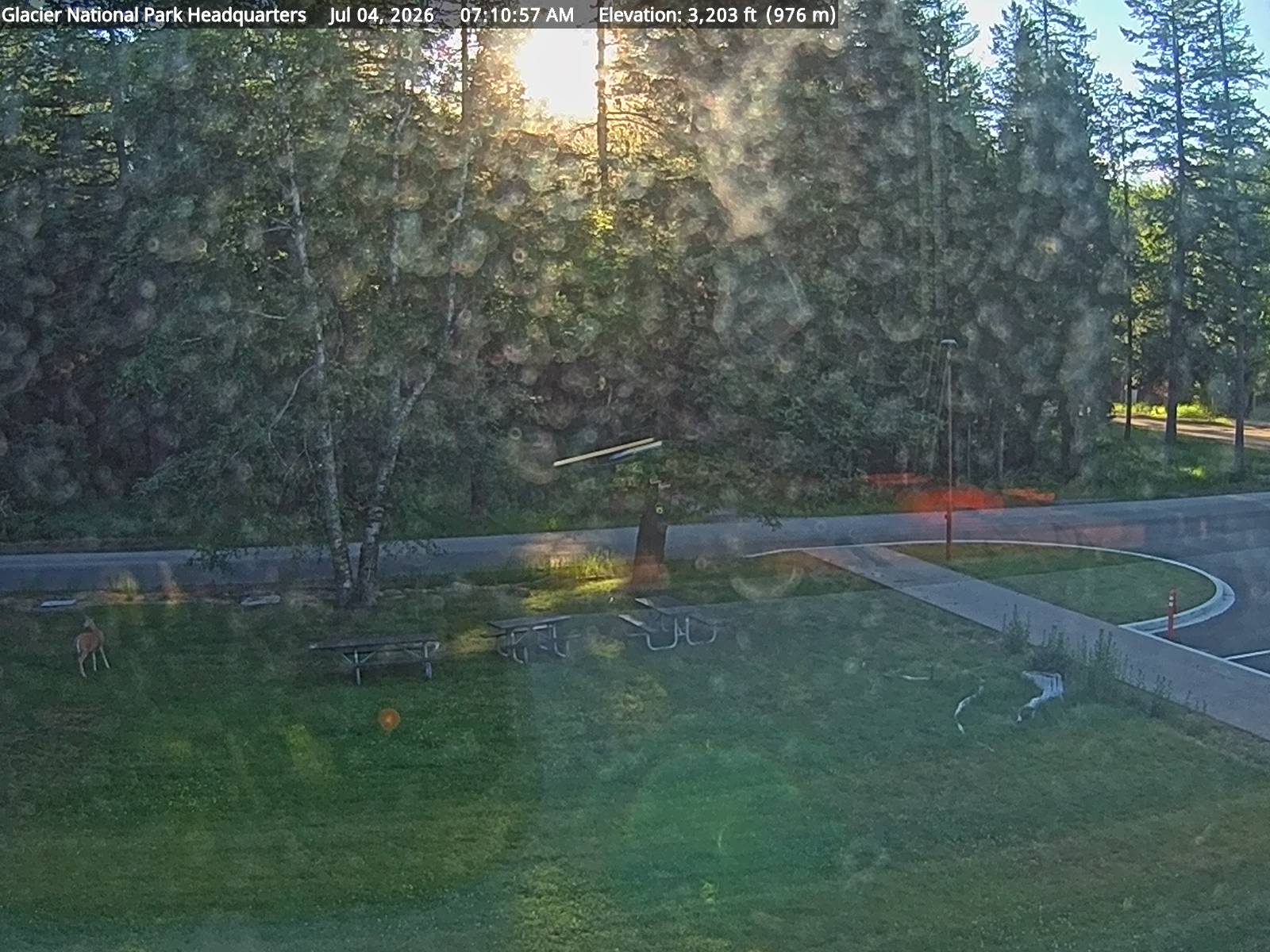
A deer stands in the grass near the picnic tables at the park headquarters, looking toward the camera. The early morning sun is rising directly behind the trees, creating a bright flare across the scene.
Geographic range
Where Does the Mule Deer Live?
Native to the western half of North America, the Mule Deer's range spans from the edge of the Great Plains to the Pacific Coast and reaches from southern Alaska down through the Rocky Mountains into central Mexico. They are the quintessential deer of the American West, thriving in the rugged terrain of the Great Basin and the Sierra Nevada mountains. While they are not found in the eastern United States, their populations are densely concentrated in states like Colorado, Wyoming, and California, where they frequently venture into residential neighborhoods.
Basemap © OpenStreetMap contributors
Recorded on EverydayEarth
Behavior
Mule Deer are primarily crepuscular, meaning they are most active during the twilight hours of dawn and dusk. During the heat of the day, they typically bed down in thick cover to chew their cud and avoid predators. They are highly social but sexually segregated for much of the year; does and their fawns form small family groups, while bucks often travel in bachelor bands until the autumn rut begins.
One of their most fascinating behaviors is 'stotting'—a unique escape mechanism where the deer leaps with all four hooves hitting the ground simultaneously. This high-pitched bounding allows them to navigate uneven, rocky terrain and outmaneuver predators like cougars or coyotes. While they are naturally shy, Mule Deer in suburban areas often become quite bold, learning the schedules of homeowners and identifying which yards offer the best 'buffet' of ornamental plants.
EverydayEarth exclusive
Camera Tips
Capturing high-quality footage of Mule Deer requires understanding their 'path of least resistance.' Look for well-worn game trails or gaps in fencing where they move between bedding areas in the brush and feeding areas like your lawn. Position your camera about 3 to 4 feet high—roughly chest height for an adult deer—and angle it slightly downward. This height ensures you capture the full body of a buck with antlers without cutting off his head when he gets close.
If you are using a camera in a backyard setting, place it near 'attractor' plants like hydrangeas, roses, or fruit trees, which act as natural bait. During the dry summer months, a simple birdbath or a consistent water source is the best way to guarantee a visit. Mule Deer are creatures of habit; if you see them once at 6:00 PM, they are likely to return at the same time the following evening.
For the best results, use a camera with a fast trigger speed (0.5 seconds or less) and a high-quality infrared flash. Mule Deer have extremely sensitive vision and can be spooked by 'Glow' IR LEDs (red glow). Using 'No-Glow' or Black IR technology will allow you to capture natural nighttime behaviors, like grooming or social sparring during the rut, without alerting the deer to the camera's presence. In the winter, ensure your camera is positioned on a south-facing slope where the deer congregate to soak up the sun.
Similar Species
Species that look similar or are commonly confused with Mule Deer.
Frequently Asked Questions
Record Mule Deer at your habitat
Connect a camera to start building your own species record — AI identifies every visitor automatically.