Nana Kunirhus
Searsia dentata
A hardy and aromatic South African icon, the Nana-berry is a magnet for colorful birds and the essential host for the Pepper Tree Moth.
Quick Identification
Size
Typically reaches 5 metres (16.4 feet) in height with a 4 metre (13.1 feet) spread.
Colors
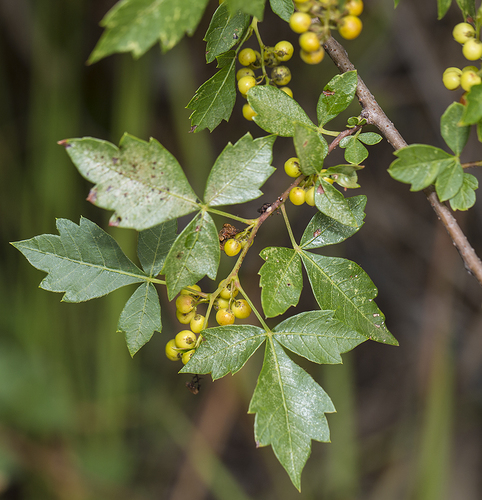
Dark green foliage turning brilliant orange and red in autumn; creamy-white flowers; red or orange ripe berries.
Key Features
- Trifoliate leaves with prominent toothed edges
- Strongly aromatic foliage when crushed
- Produces dense clusters of small, flattened red or orange drupes
- Deciduous habit with vibrant autumn colors
When You’ll See Them
Behavior
The Nana-berry is a versatile and hardy deciduous tree known for its ability to adapt its growth form to its surroundings. In open spaces, it grows as a neat, medium-sized tree, but when situated near other vegetation, it often adopts a scrambling habit, weaving its branches through neighboring trees to reach the sunlight. This makes it an excellent provider of thicket-like cover for smaller backyard inhabitants.
Ecologically, the Nana-berry acts as a bustling hub for local biodiversity. During the flowering season, its masses of creamy-white blooms attract a wide variety of pollinating insects. As the fruit ripens, the tree becomes a focal point for fruit-eating birds. It is also the primary host plant for the larvae of the Pepper Tree Moth, making it a critical species for supporters of lepidoptera.
EverydayEarth exclusive
Camera Tips
To capture the best activity on your Nana-berry tree, position your AI-powered camera approximately 2 to 3 metres away from a heavily fruiting branch. The bright red and orange berries are the primary draw for wildlife, so ensuring these are in sharp focus will help the AI identify visiting birds like Barbets, Bulbuls, and Mousebirds. Angle the camera slightly downward to avoid glare from the sun, as the glossy leaves can be quite reflective.
Because this tree is a host for the Pepper Tree Moth, consider setting your camera to a high-sensitivity motion trigger during the late spring and summer. This will help you catch the caterpillars in action or the adult moths during their nocturnal flights. If your camera has a macro or close-up mode, use it to focus on the flower clusters, which are a magnet for smaller pollinators and parasitic wasps that are often missed by the naked eye.
Seasonal timing is crucial for the Nana-berry. During the autumn months, the foliage turns a spectacular fire-red. This is the perfect time to use time-lapse settings to capture the color transition. For the best lighting, aim for early morning or late afternoon 'golden hour' shots, which highlight the serrated texture of the leaves and the rich colors of the ripening drupes against the bark.
Similar Species
Species that look similar or are commonly confused with Nana Kunirhus.
Frequently Asked Questions
Record Nana Kunirhus at your habitat
Connect a camera to start building your own species record — AI identifies every visitor automatically.