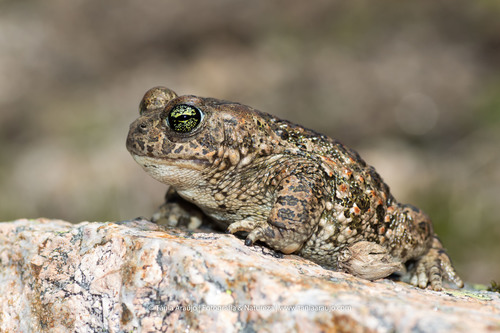
Natterjack Toad
Epidalea calamita
Discover the 'Running Toad,' a rare and charismatic amphibian famous for its vibrant yellow racing stripe and incredibly loud voice. Known for scurrying like a mouse rather than hopping, the Natterjack is a true specialist of the dunes.
Quick Identification
Size
60–70 mm (2.4–2.8 in) in length; rarely exceeding 80 mm
Colors
Olive-green, grey, or brown base with darker blotches; reddish-tipped warts; distinguished by a bright yellow stripe running down the center of the spine
Key Features
- Distinctive yellow stripe running down the middle of the back
- Short legs that result in a scurrying 'mouse-like' run rather than hops
- Parallel paratoid glands located behind the eyes
- Prominent, loud metallic croak from males during breeding season
When You’ll See Them
Behavior
The Natterjack Toad is best known for its unique method of locomotion. Unlike the Common Toad or most frogs, which hop or crawl, the Natterjack has very short back legs that allow it to run quickly across open ground. This scurrying behavior often leads observers to mistake them for small mice in the dark. They are a 'pioneer species,' specifically adapted to live in harsh, shifting environments like coastal dunes and sandy heaths where other amphibians might struggle.
During the breeding season, Natterjacks are incredibly vocal. Males possess a large vocal sac that allows them to produce a loud, rasping 'ratchel-ratchel' sound that can be heard up to two kilometers away. They are largely nocturnal, spending their days buried in deep burrows in the sand to stay cool and damp, emerging at night to hunt and socialise under the cover of darkness.
EverydayEarth exclusive
Camera Tips
Capturing a Natterjack Toad on camera requires a ground-level perspective. Because these toads are small and move close to the earth, you should place your AI camera no more than 5 to 10 inches off the ground. If you are using a trail camera, tilt it slightly downward to ensure the sensor picks up their heat signature as they scurry past. They prefer open, sandy patches with little vegetation, so look for 'corridors' of bare earth where they might travel between their burrows and breeding ponds.
Since Natterjacks are most active during the spring breeding season, timing is everything. Position your camera near the edges of shallow, sun-warmed pools between April and June. These toads prefer water that is temporary and lacks fish (which eat their tadpoles), so look for large puddles or slacks in dune systems. To get the best footage, set your camera to video mode rather than stills; the 'running' gait is the species' most diagnostic and charming behavior, and it is best captured in 10-20 second clips.
Lighting is another crucial factor. Natterjacks are strictly nocturnal, so ensure your camera has a high-quality infrared (no-glow) flash to avoid startling them. If you want to encourage them to visit a specific spot for the camera, you can place a very low-wattage solar light nearby; while it won't attract the toads directly, it will attract the beetles and moths they love to eat, turning your camera zone into a prime hunting ground.
Lastly, be mindful of the weather. Natterjacks are most active on warm, humid nights with light rain. Check your local forecast and ensure your camera batteries are fresh before a 'toad-weather' event. Because they are a protected species in many regions (like the UK), always ensure you are setting up your camera from a distance and not disturbing their sensitive breeding sites or burrows.
Frequently Asked Questions
Record Natterjack Toad at your habitat
Connect a camera to start building your own species record — AI identifies every visitor automatically.