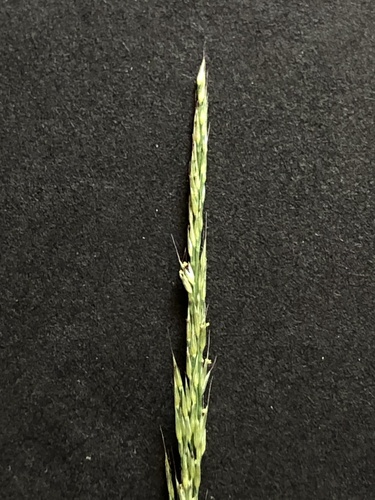
nimblewill
Muhlenbergia schreberi
The ultimate survivor of the shaded backyard, Nimblewill forms delicate, creeping mats of wiry green stems. This native North American grass is a master of adaptation, thriving where other plants fail.
Quick Identification
Size
10-50 cm (4-20 inches) in height; forming mats up to several feet wide
Colors
Pale grayish-green during the growing season; turns straw-colored or tan during winter dormancy
Key Features
- Creeping, wiry stems that root at the nodes
- Short, flat leaf blades roughly 1-2 inches long
- Slender, inconspicuous flower spikes (panicles)
- Forms dense, carpet-like patches in lawns and woods
When You’ll See Them
Behavior
Nimblewill is a resilient, warm-season perennial grass that behaves differently than most standard lawn grasses. It spreads primarily through stolons—horizontal stems that creep across the soil surface and take root at various points (nodes). This growth habit allows it to form dense, sprawling mats that can weave through other vegetation, often appearing as a localized patch of fine-textured, lighter green foliage in a darker lawn.
Because it is a warm-season species, Nimblewill is slow to wake up in the spring and is one of the first grasses to go dormant and turn brown when the first frost hits in the fall. While many homeowners view it as a weed in manicured turf, it plays a vital role in natural ecosystems by stabilizing soil in shaded forest edges and providing a low-growing cover for small invertebrates and ground-foraging birds.
EverydayEarth exclusive
Camera Tips
Capturing the subtle beauty of Nimblewill requires a specialized approach, as it lacks the height of more dramatic ornamental grasses. To document its growth, mount your camera on a low-profile stake or a ground-level tripod, keeping the lens no more than 6 to 10 inches above the soil. A downward angle of 30 to 45 degrees is perfect for showing the matting texture of the stolons as they spread across the ground.
Time-lapse is the most rewarding way to film this species. Set your camera to capture one frame every 30 minutes during the transition from late spring to early summer. This will reveal the fascinating way the wiry stems "creep" and fill in bare earth. If you are using a trail camera with a motion sensor, place it near a patch of Nimblewill during the late summer when the seeds are mature; the movement of small sparrows or juncos foraging among the stems will trigger the camera, giving you great shots of wildlife interacting with the plant.
For the best lighting, avoid the harsh midday sun, which can make the pale green leaves look washed out. Instead, aim for the "Golden Hour" shortly after sunrise or before sunset. The low light angle will catch the fine, hair-like texture of the seed heads (panicles), making them appear to glow. If your camera has a macro setting or a close-focus lens, use it to capture the tiny, translucent flowers that appear in late summer—they are surprisingly intricate when viewed up close.
Similar Species
Species that look similar or are commonly confused with nimblewill.
Frequently Asked Questions
Record nimblewill at your habitat
Connect a camera to start building your own species record — AI identifies every visitor automatically.