North American Porcupine
Erethizon dorsatum
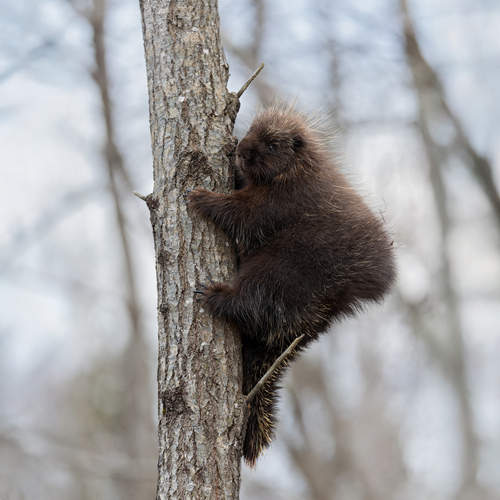
The North American Porcupine is a slow-moving, quill-covered marvel of the forest that often goes unnoticed until it's caught on camera. These solitary rodents are master climbers and resilient survivors, making them a fascinating 'heavyweight' visitor for any backyard trail cam enthusiast.
Quick Identification
Size
Length: 60–90 cm (24–36 in); Weight: 5–14 kg (12–35 lbs)
Colors
Dark brown to black underfur covered by long, yellowish-white quills with black tips. No significant color difference between males and females.
Key Features
- Coated in approximately 30,000 sharp, barbed quills
- Short, thick, muscular tail used for defense and climbing
- Small, rounded head with dark eyes and barely visible ears
- Large, curved claws adapted for climbing trees
When You’ll See Them
Behavior
The North American Porcupine is a largely solitary and slow-moving rodent, though it may share a winter den with others to conserve heat. While they are famous for their defensive quills, they are non-aggressive and prefer to retreat or climb trees when threatened. If cornered, they will turn their back to the predator, tuck their head, and lash out with their powerful, quilled tail. Contrary to popular myth, they cannot 'throw' their quills; the quills only detach upon contact.
These animals are master climbers, spending a significant portion of their lives high in the canopy foraging for food. On the ground, they have a distinctive waddling gait. They are surprisingly vocal, especially during the autumn mating season, producing a variety of moans, grunts, and high-pitched shrieks that can sound eerily human to an unsuspecting homeowner.
EverydayEarth exclusive
Camera Tips
To capture high-quality footage of a porcupine, position your camera about 2 to 3 feet off the ground. Since porcupines are frequent climbers, aim the camera at the base of large, textured trees like hemlocks, oaks, or pines. If you notice 'girdled' trees (where bark has been stripped away in patches), that is a primary activity zone. Angle the camera slightly upward to capture them as they begin their ascent or descent from the canopy.
Because porcupines have an intense craving for sodium, especially in the spring, mineral blocks or 'salt licks' placed in front of a camera are highly effective lures. Be aware that they are known to chew on wooden tool handles, porch railings, or even tires to satisfy this salt craving, so placing your camera near wooden structures they’ve previously nibbled on is a winning strategy. Just ensure your camera and mounting straps are secure, as their curious gnawing can sometimes extend to equipment!
Set your camera to take short video clips (15-20 seconds) rather than just stills. Porcupines move slowly, and a video captures their unique waddle and the way their quills shift as they move. Since they are strictly nocturnal, ensure your camera has a strong infrared flash. Black-LED or 'No-Glow' cameras are preferred to avoid startling them, although they generally have poor eyesight and are more sensitive to sound and scent than light.
Similar Species
Species that look similar or are commonly confused with North American Porcupine.
Frequently Asked Questions
Record North American Porcupine at your habitat
Connect a camera to start building your own species record — AI identifies every visitor automatically.