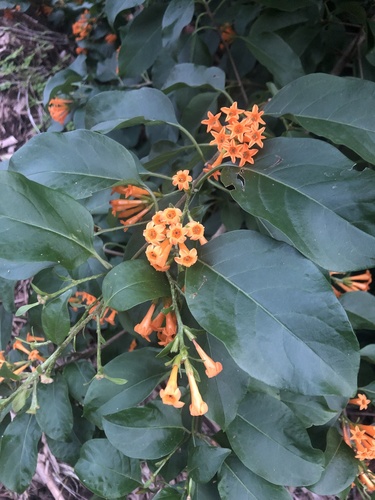
orange cestrum
Cestrum aurantiacum
Bring a burst of tropical fire to your garden with the orange cestrum. This vibrant evergreen shrub is a magnet for hummingbirds and butterflies, turning any backyard into a bustling pollinator paradise.
Quick Identification
Size
A large shrub reaching 6.5-13 feet (2-4 meters) in height with a spread of 5-10 feet (1.5-3 meters).
Colors
Bright golden-orange to deep saffron flowers; dark, glossy emerald green foliage; small white berries.
Key Features
- Clusters of 1-inch tubular orange flowers
- Glossy, lance-shaped leaves that emit a pungent odor when crushed
- Small, egg-shaped white berries
- Arching, woody stems with a semi-scandent growth habit
When You’ll See Them
Behavior
Orange cestrum is a vigorous, evergreen shrub known for its prolific and nearly continuous flowering in warmer climates. Unlike many of its relatives in the Solanaceae family that bloom at night, this species is strictly diurnal, opening its bright orange trumpets to soak up the sun. Its growth habit is naturally sprawling and arching, often leaning on fences or neighboring trees for support, making it an excellent choice for garden borders or natural privacy screens.
As a biological hub, the orange cestrum plays a vital role in suburban ecosystems. It acts as a primary nectar source, particularly for hummingbirds and long-tongued insects who are drawn to the specific shape and color of its blossoms. While it is a delight to watch, all parts of the plant are toxic if ingested, a natural defense mechanism common to the nightshade family. It is also quite hardy, showing a remarkable ability to bounce back from light frosts in temperate zones.
EverydayEarth exclusive
Camera Tips
To capture the true beauty of the orange cestrum, place your camera at a height of 3 to 5 feet, targeting the largest clusters of tubular flowers. Since the primary draw for this plant is the wildlife it attracts, aim your lens at a 45-degree angle to the blossoms. This perspective allows the AI to recognize the 'hovering' motion of hummingbirds or the landing patterns of butterflies against the vibrant orange backdrop. Avoid pointing the camera directly into the sun; instead, position it so the morning light illuminates the flowers from the side, which highlights their waxy texture without washing out the color.
Because hummingbirds are incredibly fast, we recommend setting your camera to its highest trigger sensitivity and a fast shutter speed (or 'Action' mode) if available. The orange cestrum doesn't require food bait, but ensuring the plant is well-watered will maximize nectar production, ensuring frequent visits from subjects. If your camera supports zone-based triggers, focus the active area specifically on the outer edges of the flower clusters where visitors are most likely to linger.
For the best seasonal results, monitor the plant during the heat of mid-summer when nectar production is at its peak. This is when you will see the most diverse range of insects and avian visitors. If you are using a trail camera, ensure there are no stray leaves directly in front of the lens; the orange cestrum grows quickly, and a single leaf swaying in the wind can trigger hundreds of false alerts. Periodic pruning around the camera's field of view will keep your shots clear and your AI detections accurate.
Frequently Asked Questions
Record orange cestrum at your habitat
Connect a camera to start building your own species record — AI identifies every visitor automatically.