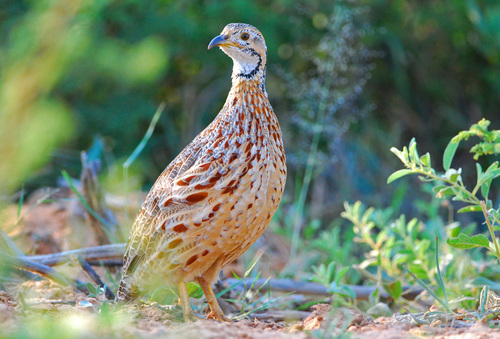
Orange River Francolin
Scleroptila gutturalis
A social and vocal ground bird of the African savanna, the Orange River Francolin is easily identified by its striking speckled 'necklace' and its preference for life on the move in small family groups.
Quick Identification
Size
32–35 cm (12.5–14 in) in length; 350–550 g (12–19 oz) in weight
Colors
Mottled brown and grey upperparts; white throat with a black-speckled 'necklace'; buff or white belly; southern populations feature a black neck-line reaching the eye.
Key Features
- Bold black-and-white speckled collar
- Pale throat patch
- Rufous wing feathers visible during short bursts of flight
- Strong, yellow-toned legs and a short, dark beak
When You’ll See Them
Geographic range
Where Does the Orange River Francolin Live?
Native to the African continent, the Orange River Francolin is found in two distinct regions of sub-Saharan Africa. The southern population is core to the highveld and arid interior of South Africa, Namibia, Botswana, and Lesotho. A separate northern population, sometimes referred to as Archer's Francolin, inhabits the dry grasslands of Ethiopia, Somalia, South Sudan, and parts of Kenya, making it a true specialist of the African savanna-woodland mosaic.
Basemap © OpenStreetMap contributors
Behavior
The Orange River Francolin is a highly social ground bird, almost always found in small family groups known as coveys, typically ranging from 4 to 12 individuals. They are perhaps best known for their raucous, rhythmic call which is most frequent at dawn and dusk, serving to define territory and keep the group together. While they are capable fliers, they prefer to run from danger, using their powerful legs to disappear into thick brush with surprising speed.
In a backyard or rural setting, these birds are creatures of habit. They often follow the same foraging paths every day, moving from their nocturnal roosting spots in tall grass to open patches of ground where they search for food. They are fond of dust-bathing in dry soil, a social activity that also helps them manage parasites. While generally shy, they can become quite accustomed to human presence in areas where they aren't hunted, often visiting gardens at predictable times.
EverydayEarth exclusive
Camera Tips
To capture high-quality footage of the Orange River Francolin, camera placement is everything. Because these birds are strictly ground-dwellers, your camera should be mounted very low—ideally between 6 and 10 inches off the ground. Aiming the lens slightly upward from this low vantage point will capture the intricate black-and-white 'necklace' and facial markings that are often lost when looking down from a higher mount.
These birds are creatures of routine. Look for 'dusting bowls' in dry soil or narrow paths through tall grass where the ground has been flattened; these are perfect locations for a trail camera. In a backyard, you can encourage them to linger by providing a 'scratch' area of cracked corn or sunflower seeds. Place the bait in an open spot that is still close to cover, as they feel most comfortable when they have a quick escape route into the bushes.
Because Orange River Francolins move in coveys, a camera with a fast trigger speed and a short 'recovery time' is essential. Often, a single bird will scout ahead while the rest of the family follows a few seconds later; a slow camera might only catch the tail of the last bird. Using a multi-shot burst mode or 15-second video clips will allow you to see the fascinating social interactions within the group. Ensure your 'No-Glow' IR flash is active, as these birds are most active during the low-light hours of dawn when traditional flashes might startle them.
Similar Species
Species that look similar or are commonly confused with Orange River Francolin.
Frequently Asked Questions
Record Orange River Francolin at your habitat
Connect a camera to start building your own species record — AI identifies every visitor automatically.