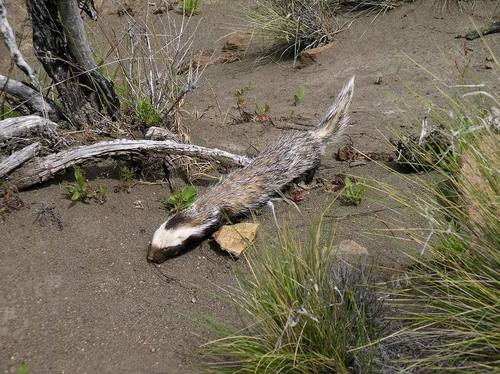
Patagonian Weasel
Lyncodon patagonicus
The ghost of the southern steppes, the Patagonian weasel is a master of the underground hunt and a rare prize for any backyard explorer.
Quick Identification
Size
Body length 30-35 cm (12-14 in) with a 6-9 cm (2-4 in) tail; weighs between 225-300g (0.5-0.7 lbs).
Colors
Frosted grayish-brown body with a wide, creamy-white or yellowish band running from the forehead down the neck to the shoulders.
Key Features
- Distinctive white or yellow 'cap' and nape
- Short, sturdy limbs suited for burrowing
- Small, rounded ears nearly hidden by fur
- Darker underparts contrasting with the frosted back
When You’ll See Them
Geographic range
Where Does the Patagonian Weasel Live?
The Patagonian weasel is a native specialist of the southern cone of South America. Its core range is found throughout the vast pampas and cold steppes of western and southern Argentina, stretching from the foothills of the Andes to the Atlantic coast. It also inhabits sections of southern Chile, particularly in the Magallanes and Aysén regions. While it has a relatively large geographic footprint, it is nowhere considered common and remains a rare find for wildlife enthusiasts.
Basemap © OpenStreetMap contributors
Behavior
The Patagonian weasel is one of the most elusive and least-studied carnivores in South America. Despite its small size, it is a fierce and specialized predator, often referred to as a 'fencing master' of the pampas. It is primarily solitary and spends a significant amount of its time navigating the subterranean tunnels of its prey or sheltering in rocky crevices. While it can be active at any time, it shows a preference for the twilight hours when its primary prey is most active.
Historically, this species gained scientific attention when it was mentioned in the journals of Syms Covington, who assisted Charles Darwin during the HMS Beagle voyage. Unlike many other mustelids, the Patagonian weasel is not known for being particularly bold around human settlements, preferring the undisturbed stretches of the cold steppe. It is a highly specialized hunter, using its slender body to enter the burrows of rodents that larger predators cannot reach.
EverydayEarth exclusive
Camera Tips
To capture the Patagonian weasel on camera, you must focus on 'micro-habitats' within the steppe. Look for areas with high densities of rodent burrows, particularly those of tuco-tucos (Ctenomys). These weasels are specialized burrow-hunters, so placing your camera just 12-18 inches off the ground, angled slightly downward toward a burrow entrance or a natural bottleneck between rocky outcrops, is your best bet.
Because they are small and move with quick, erratic 'S-shaped' movements, set your camera to a fast trigger speed and use a multi-shot burst mode. A 3-5 photo burst will help ensure you get a clear frame of the animal rather than just a blur of fur as it darts past. If your camera allows for high-frame-rate video (60fps), this is often better for capturing their frantic hunting behavior than still photos.
Scent lures can be highly effective for this species. A small amount of meat-based lure or even castorium placed on a log or stone in front of the camera can encourage the weasel to pause and sniff, giving you the perfect identification shot of its distinctive white head markings. Since they are active in the cold, windy pampas, ensure your camera housing is well-secured and shielded from the extreme Patagonian winds which can cause false triggers from moving vegetation.
Similar Species
Species that look similar or are commonly confused with Patagonian Weasel.
Frequently Asked Questions
Record Patagonian Weasel at your habitat
Connect a camera to start building your own species record — AI identifies every visitor automatically.