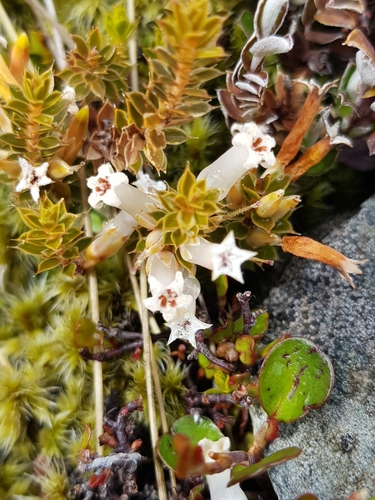
Patotara
Styphelia nesophila
The Patotara is a rugged, low-growing treasure of the Southern Hemisphere, known for its needle-sharp leaves and delicate, hair-fringed flowers. A favorite of native lizards, this hardy shrub brings vibrant red berries and year-round texture to coastal and alpine landscapes alike.
Quick Identification
Size
A low-growing, prostrate shrub typically reaching 10–30 cm (4–12 inches) in height, often spreading to form mats up to 1 metre (3.3 feet) wide.
Colors
Dark green to bronze-tinged foliage; small, waxy white flowers; vibrant red to orange-red fleshy berries.
Key Features
- Sharp, needle-like leaf tips that are prickly to the touch
- Small, tube-shaped white flowers with 'bearded' hairy petal lobes
- Prostrate, trailing growth habit forming dense ground cover
- Bright red or orange-red fleshy drupes (berries)
When You’ll See Them
Geographic range
Where Does the Patotara Live?
Patotara is native to the temperate regions of the Southern Hemisphere, primarily found throughout New Zealand and Southeast Australia. In Australia, its range extends across the cooler climates of Tasmania, Victoria, and New South Wales. In New Zealand, it is a common sight from the coastlines all the way up to sub-alpine zones on both the North and South Islands, demonstrating a remarkable ability to adapt to varying altitudes.
Basemap © OpenStreetMap contributors
Behavior
Patotara, also known as the Sharp Beard-heath, is a resilient pioneer species characterized by its extreme hardiness. It does not 'move' like the wildlife usually captured on cameras, but its behavior is defined by its growth strategy. It hugs the ground to avoid the mechanical damage of high winds and utilizes its sharp, prickly leaves as a defense mechanism against browsing animals. Its growth is slow but steady, allowing it to colonize nutrient-poor soils where other plants fail.
This plant exhibits a fascinating ecological relationship with local fauna. During its flowering season, it provides a vital source of nectar for small insects. However, its most notable interaction is with native lizards, such as skinks and geckos. These reptiles are attracted to the sweet, fleshy berries and serve as the plant's primary seed dispersers. By consuming the fruit and depositing the seeds elsewhere, the lizards help the Patotara expand its territory across rocky and sandy terrains.
EverydayEarth exclusive
Camera Tips
Capturing the Patotara on an AI-powered camera requires a ground-level approach. Because this species is prostrate (creeping), you should mount your camera on a low-profile stake or a weighted base just a few inches off the ground. Aim the lens horizontally to capture the 'carpet' effect of the plant. To get the best detail of the tiny, bearded flowers, ensure your camera is positioned within its minimum focal distance, usually 12-18 inches away from the nearest branch.
The unique value of monitoring Patotara comes from the visitors it attracts. To see wildlife interactions, focus your camera on a patch that is heavy with ripening berries during the late summer months. This is the best way to record native skinks or geckos feeding. Use a high-sensitivity trigger setting, as these small reptiles move quickly and can be easily missed. Setting your camera to record short video clips rather than still photos will provide the best chance of seeing the lizards navigating the prickly leaves.
Lighting can be a challenge since the plant is so low to the ground and often shaded by taller grasses. Try to place your camera in a spot that receives full morning sun. The early light will illuminate the white flowers and make the red berries glow, creating a high-contrast image that is easier for AI models to identify. If your backyard is prone to wind, clear any tall grass immediately in front of the lens to prevent false triggers from moving blades.
Finally, consider the seasonal changes. In winter, the foliage often turns a deeper bronze color. Adjusting your camera's white balance or exposure settings in the spring can help capture the transition as the plant brightens and begins to bloom. Monitoring the same patch year-round provides a fascinating look at the lifecycle of one of the region's hardiest native shrubs.
Frequently Asked Questions
Record Patotara at your habitat
Connect a camera to start building your own species record — AI identifies every visitor automatically.