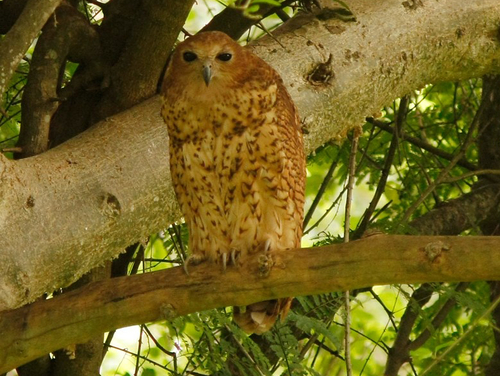
Pel's Fishing-Owl
Scotopelia peli
A ginger-hued giant of the African night, Pel's Fishing-Owl is the ultimate river specialist. This massive bird of prey combines incredible patience with a spectacular strike to rule the water's edge.
Quick Identification
Size
Length of 51-63 cm (20-25 in); wingspan up to 150 cm (60 in); weight ranges from 2 to 2.3 kg (4.4-5.1 lbs)
Colors
Deep rufous-brown or ginger-toned upperparts with fine dark barring; pale cream to buff underparts heavily marked with dark heart-shaped spots or chevrons; dark brown eyes
Key Features
- Massive, blocky build with a large rounded head and no ear tufts
- Rich ginger or rufous plumage with dusky bars
- Huge dark eyes and a powerful blackish beak
- Unfeathered, pale straw-colored legs and feet designed for water
When You’ll See Them
Behavior
The Pel's Fishing-Owl is one of the world's most specialized and elusive avian predators. Often referred to as a 'ginger giant,' this owl is strictly nocturnal, spending its daylight hours hidden deep within the dense canopy of large trees overhanging riverbanks or swamps. Unlike many owls that hunt in silence to surprise land mammals, the Pel's doesn't need silent flight feathers because its aquatic prey cannot hear it coming through the air.
These owls are highly territorial and usually live in monogamous pairs. They are best known for their haunting, deep booming hoot that can carry for several kilometers across the water, often used to signal territory or communicate with a mate. While they are generally shy and avoid human contact, they can become accustomed to quiet observers in areas where their habitat is protected.
EverydayEarth exclusive
Camera Tips
Capturing a Pel's Fishing-Owl on camera requires targeting their specific hunting 'stages.' Look for horizontal branches that overhang deep, quiet pools of water, especially those where you see white droppings or fish scales on the ground below. Mount your camera 5-7 feet up a nearby trunk, angled slightly downward toward the water's surface or the likely 'fishing perch.' Because these birds are massive, ensure your camera has a wide enough field of view to capture the full wingspan if they take flight.
Since they are strictly nocturnal, a camera with high-quality 'No-Glow' infrared LEDs is essential. Standard white-flash cameras will likely spook the bird and prevent it from returning to that hunting spot for days. Set your camera to 'Hybrid Mode' (photo plus video) if possible; a 20-second video clip is often the only way to truly appreciate the incredible 'plunge-and-grab' technique they use to snag fish from the river.
If you live on a property with a river or dam, you can improve your chances by creating a clear line of sight. Trim minor obscuring twigs from a known roosting tree, but never remove the main canopy cover, as the owl relies on it for daytime protection from mobbing birds. Use a high-speed trigger (0.3s or faster), as the strike on a fish happens in the blink of an eye. During the dry season, focus your cameras on the last remaining deep pools, as fish—and owls—will congregate there in high densities.
Similar Species
Species that look similar or are commonly confused with Pel's Fishing-Owl.
Frequently Asked Questions
Record Pel's Fishing-Owl at your habitat
Connect a camera to start building your own species record — AI identifies every visitor automatically.