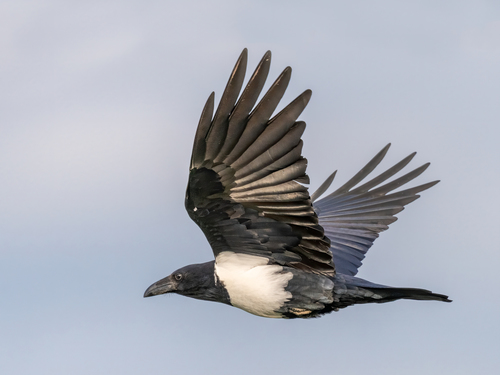
Pied Crow
Corvus albus
Dapper and exceptionally bright, the Pied Crow is the tuxedo-clad genius of the African skies. Known for its bold white chest and sharp wit, this adaptable bird is a fascinating visitor to any backyard camera station.
Quick Identification
Size
Length: 45–52 cm (18–20 in); Wingspan: 90–100 cm (35–39 in); Weight: 400–600 g (0.9–1.3 lbs)
Colors
Glossy black head, neck, wings, and tail; brilliant white collar across the upper back and a solid white breast. Iridescent purple or blue sheen on black feathers in bright light.
Key Features
- Broad white 'vest' covering the breast and mantle
- Heavy, slightly curved black bill
- Square or slightly notched tail
- Strong, black legs adapted for walking and hopping
When You’ll See Them
Behavior
The Pied Crow is widely regarded as one of Africa's most intelligent and resourceful avian species. They are highly social, typically found in pairs or small family units, though they can gather in flocks of several hundred at communal roosting sites or abundant food sources. Their flight is strong and direct, often interspersed with impressive aerial displays, soaring, and playful diving maneuvers.
In residential areas, these crows are incredibly bold and observant. They have been known to memorize the routines of humans, such as when trash is put out or when pets are fed outdoors. While they are scavengers by nature, they are also vocal communicators, utilizing a variety of harsh 'caws' and subtle rattling or clicking sounds to signal to their partners or defend their territory from intruders.
EverydayEarth exclusive
Camera Tips
Capturing the Pied Crow on camera requires a strategy that accounts for their high intelligence and wariness of new objects. Place your camera in an open area of your yard where they have a clear line of sight to look for predators. A height of 3 to 5 feet is ideal if mounting on a fence post or wall, but for the most intimate 'eye-level' shots of them foraging, consider a ground-level mount or a low tripod about 12 inches off the turf. Angle the camera slightly downward to capture the detail of their white breast against the ground.
Because the Pied Crow has high-contrast black and white plumage, exposure can be tricky. Try to position your camera with the sun behind it to avoid silhouetting. If your camera allows for exposure adjustment, slightly underexposing can prevent the white 'vest' from becoming a washed-out white patch in your photos. High-speed shutter settings or 'burst' modes are essential, as these birds are constant movers, frequently tilting their heads and hopping quickly between spots.
To lure them into frame, use high-protein treats like unsalted peanuts, dry dog kibble, or even small pieces of suet. Pied Crows are also famously attracted to shiny objects; placing a silver jar lid or a small mirror near your bait can pique their curiosity and keep them in the frame longer as they investigate. During the heat of the day, a shallow birdbath can also be a magnet, as they enjoy both drinking and splashing to cool down. Be patient—once one crow decides your yard is safe, others will quickly follow suit.
Similar Species
Species that look similar or are commonly confused with Pied Crow.
Cape Crow
Entirely black plumage with no white markings and a slightly more slender bill.
White-necked Raven
Much larger and bulkier with a massive bill; white is restricted to a patch on the nape of the neck.
House Crow
Smaller and slimmer with a greyish-black neck and breast rather than pure white.
Frequently Asked Questions
Record Pied Crow at your habitat
Connect a camera to start building your own species record — AI identifies every visitor automatically.