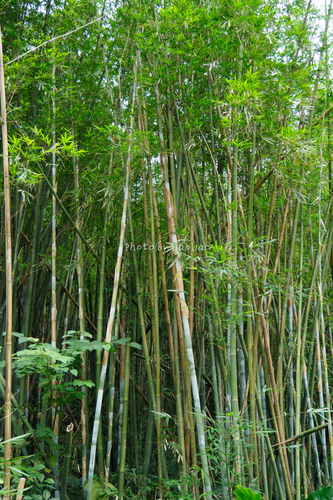
Punting Pole Bamboo
Bambusa tuldoides
Admired for its towering height and architectural straightness, Punting Pole Bamboo is a vertical ecosystem in itself. This non-invasive clumping giant provides a secure sanctuary for backyard birds and a stunning, rustling backdrop for your wildlife camera.
Quick Identification
Size
Reaches heights of 6-15 meters (20-50 feet) with culm diameters of 3-6 centimeters (1.2-2.4 inches).
Colors
Vibrant emerald green when young, maturing to a golden-yellow or tan; foliage is a consistent deep green.
Key Features
- Thick-walled, straight culms with high tensile strength
- Densely clumping growth habit that does not run
- Distinctive white powdery bloom on young shoots
- Asymmetrical branching at the nodes
When You’ll See Them
Behavior
Punting Pole Bamboo is a 'clumping' bamboo species, which means it grows in tight, predictable clusters rather than spreading uncontrollably through underground runners. This growth pattern makes it an excellent choice for suburban gardens where privacy is desired without the risk of invading neighboring properties. Historically, its name reflects its incredible strength; in southern China, the exceptionally straight and thick-walled culms were the primary tool for 'punting' or poling boats along shallow riverbeds.
In a backyard ecosystem, this bamboo acts as a vertical highway and high-rise apartment for wildlife. Its dense canopy provides a secure thermal cover for birds during cold nights and a protected nesting site away from ground-based predators. While the plant itself is stationary, it reacts dynamically to its environment—its culms can bend significantly in high winds without snapping, and its leaves produce a distinctive 'hissing' sound that can mask the noise of approaching predators for the small animals hiding within it.
EverydayEarth exclusive
Camera Tips
Capturing the beauty of Punting Pole Bamboo requires a shift from standard motion-triggering to time-lapse photography. To witness the incredible speed of its growth, set your AI camera to time-lapse mode during the late summer shooting season. Position the camera at a low angle near the base of the clump to watch the 'shoots' emerge from the soil and skyrocket upward. An interval of one photo every 4-6 hours is usually sufficient to document the dramatic change over a single week.
Because bamboo is a magnet for birds like finches and warblers seeking shelter, place your camera about 5-6 feet off the ground, angled slightly downward toward the interior of the 'clump' where branches begin to diverge from the main culms. This is a prime spot for capturing nesting behavior or birds foraging for insects among the leaves. Use the AI's detection settings to ignore the constant movement of the leaves in the wind by lowering the motion sensitivity, which prevents your SD card from filling up with 'ghost' triggers while still capturing solid animal movement.
For the most striking visual results, pay attention to the lighting. The smooth, waxy surface of the culms can cause a 'white-out' effect on infrared trail cameras at night due to the flash reflecting directly back. To prevent this, position the camera at a 45-degree angle to the stalks rather than facing them head-on. This allows the light to diffuse across the grove, highlighting the texture of the nodes and the depth of the forest-like interior. During the day, the 'golden hour' just before sunset will make the yellow-green stalks appear to glow, providing a professional-grade backdrop for any wildlife that passes through the frame.
Frequently Asked Questions
Record Punting Pole Bamboo at your habitat
Connect a camera to start building your own species record — AI identifies every visitor automatically.