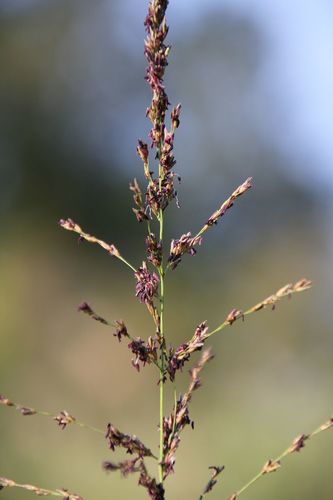
Purple moor grass
Molinia caerulea
A structural masterpiece of the wild moors, this grass transforms from lush summer green to deep purple plumes and radiant autumn gold. It is a vital sanctuary for the hidden creatures that crawl and flutter through our dampest landscapes.
Quick Identification
Size
Tussocks 30–90 cm (12–35 in) tall; flowering stalks up to 2 m (6.5 ft)
Colors
Bright green leaves, dark purple or blue-tinged flower spikes, turning golden-orange in autumn
Key Features
- Distinctive purple-tinted seed heads
- Dense, hummock-forming growth called tussocks
- Long, slender flowering stalks with only one node near the base
- Leaves turn a striking straw-yellow or orange in winter
When You’ll See Them
Behavior
In the wild, it acts as a foundational species for moorland ecosystems. Its dense growth provides essential nesting material and protective cover for ground-nesting birds, small mammals, and various amphibians. While it can be quite dominant in damp, acidic environments, it is widely appreciated in garden design for its architectural movement and the way it catches the light.
EverydayEarth exclusive
Camera Tips
When using an AI-powered camera to monitor Purple moor grass, your primary goal is to capture the wildlife that uses it for cover. Position your camera at a low angle, roughly 6 to 10 inches off the ground, aiming through a natural gap between two tussocks. This creates a 'wildlife tunnel' effect, allowing you to capture clear footage of voles, shrews, and even hedgehogs as they navigate the dense foliage. Because the long stalks sway significantly in the wind, you may need to reduce your camera's PIR (motion) sensitivity to avoid false triggers on blustery days.
To truly highlight the beauty of the plant itself, pay close attention to lighting. If your camera setup allows for adjustable positioning, face it toward the sun (backlighting). When the sun is low on the horizon during the 'golden hour,' the purple seed heads will appear to glow, creating high-contrast images that are visually stunning. If your camera features a time-lapse mode, this is one of the best species to track; a photo taken once a day from July through November will yield a spectacular video of the grass shifting from vibrant green to deep purple and finally to a brilliant autumnal orange.
For those interested in the 'macro' side of backyard wildlife, Purple moor grass is a magnet for the Small Heath butterfly and various moth species. Mount your camera on a steady stake within two feet of a flowering plume. Use the highest resolution settings available and set the trigger to 'High' to ensure you catch the fast-moving pollinators that visit the tiny flowers. In the winter, don't take your camera down; the bleached, frost-covered stems provide a beautiful architectural backdrop for wintering birds like meadow pipits seeking out remaining seeds.
Similar Species
Species that look similar or are commonly confused with Purple moor grass.
Frequently Asked Questions
Record Purple moor grass at your habitat
Connect a camera to start building your own species record — AI identifies every visitor automatically.