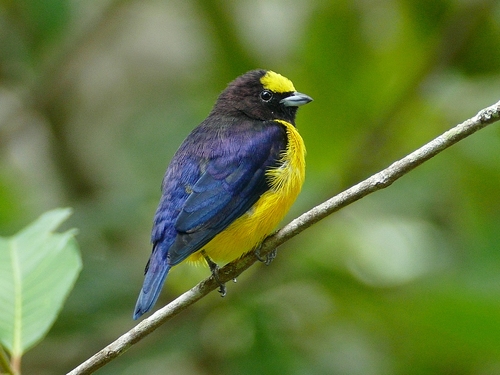
Purple-throated Euphonia
Euphonia chlorotica
A tiny jewel of the South American canopy, the Purple-throated Euphonia delights observers with its striking violet plumage and melodic mimicry. Often found near mistletoe, this vibrant songbird is a master of the treetops and a welcome visitor to fruit-rich gardens.
Quick Identification
Size
9–10 cm (3.5–4 in) in length; weight approximately 8–11 g (0.28–0.39 oz)
Colors
Males feature a glossy blue-black upperparts with a purple sheen, a distinct purple throat, and a bright yellow forehead and belly. Females are more camouflaged with olive-green upperparts and yellowish-white or greyish underparts.
Key Features
- Deep purple-black throat on males
- Bright yellow patch on the forehead
- Short, thick, finch-like beak
- Compact, short-tailed silhouette
When You’ll See Them
Behavior
The Purple-throated Euphonia is a tireless and energetic songbird, often seen moving through the canopy in pairs or small family groups. They are known for their undulating flight and their tendency to join mixed-species foraging flocks. Despite their small size, they have a big presence in the garden, frequently giving away their location with a series of metallic, whistled calls and impressive mimicry of other local bird species.
These birds have a highly specialized relationship with mistletoe. They are efficient seed dispersers; after eating the berries, the sticky seeds pass through their digestive tract quickly and are deposited on tree branches where new mistletoe can grow. In backyard settings, they are relatively bold and will habituate to human presence if there is a reliable source of fruit or water available.
EverydayEarth exclusive
Camera Tips
Capturing a high-quality image of a Purple-throated Euphonia requires focusing on their specific dietary habits. These birds are mistletoe specialists, so if you have mistletoe growing in your trees, that is the premier spot for camera placement. Mount your AI-powered camera 5 to 10 feet high, aiming directly at the fruit clusters. Because these birds are incredibly fast and rarely sit still for long, set your camera to its highest trigger sensitivity and use a 'Burst Mode' to capture multiple frames per second. This increases your chances of getting a sharp shot of the male’s iridescent purple throat before he flits away.
Lighting is your best friend when dealing with iridescent species. To avoid the bird appearing as a dark silhouette, position your camera facing north or south to ensure side-lighting or front-lighting during the peak morning hours. This directional light will hit the feathers at the correct angle to reveal the violet and blue-black shimmer that gives the bird its name. If the area is heavily shaded by a canopy, consider increasing the exposure compensation in your camera settings if the model allows it.
While they don't visit traditional seed feeders, you can lure them to a specific spot using fruit or water. A platform feeder stocked with sliced bananas, papayas, or oranges placed near cover can be very effective. However, the most reliable lure for a backyard camera is a birdbath with moving water. A solar-powered fountain or a simple 'dripper' setup creates sound and ripples that attract Euphonias from the treetops. Place the camera at eye level with the water's edge for intimate, high-detail footage of them bathing.
Similar Species
Species that look similar or are commonly confused with Purple-throated Euphonia.
Frequently Asked Questions
Record Purple-throated Euphonia at your habitat
Connect a camera to start building your own species record — AI identifies every visitor automatically.