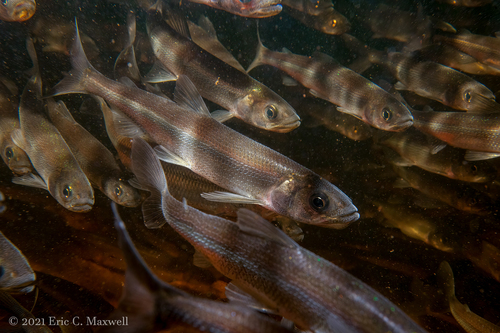
Rainbow Smelt
Osmerus mordax
A shimmering silver traveler of the northern depths, the Rainbow Smelt is famous for its spectacular midnight migrations and its iridescent, 'rainbow' scales. These small but feisty fish are the heartbeat of the spring stream, drawing in predators and nature enthusiasts alike during their annual spawning runs.
Quick Identification
Size
7-9 inches (18-23 cm) on average, reaching up to 12 inches (30 cm); weight typically 1-6 ounces (30-170 g).
Colors
Olive-green back with shimmering silver-purple iridescent sides and a white belly; fins are generally clear or pale.
Key Features
- Slender, elongated body shape
- Small adipose fin located between the dorsal fin and tail
- Large mouth with prominent teeth on the tongue and jaws
- Deeply forked tail fin
When You’ll See Them
Behavior
Rainbow Smelt are highly social, schooling fish that spend most of the year in the deeper, cooler waters of lakes or coastal areas. They are known for their dramatic nocturnal movements, migrating from deep water to the surface at night to feed. During the spring, they exhibit anadromous behavior, moving from the ocean or large lakes into small freshwater streams to spawn. These spawning runs are often massive, with thousands of fish crowding into shallow ripples under the cover of darkness.
Despite their small size, they are aggressive predators. They are also incredibly sensitive to light and temperature changes, which dictates their daily and seasonal migrations. In many regions, they have a complex relationship with humans; they are a popular target for 'smelting' (fishing with dip nets during the spring run) but can also be an invasive species that outcompetes native fish for food in inland lakes.
EverydayEarth exclusive
Camera Tips
Capturing the Rainbow Smelt requires an underwater camera setup or a high-quality action camera with waterproof housing positioned in a shallow stream during the spring. Because these fish are strictly nocturnal spawners, you cannot rely on natural light. Use a camera with strong Infrared (IR) capabilities or setup a dim, indirect submersible LED light. Avoid bright, direct white lights as they will spook the school and cause the fish to flee back to deeper water.
The best placement for your camera is in 'riffles'—shallow, fast-moving sections of a stream with a gravel or pebble bottom. Position the camera at a low angle, roughly 4 to 6 inches above the stream bed, facing slightly upstream. This allow you to catch the fish as they fight against the current. Using a weighted mount or a small tripod secured with rocks is essential, as spring currents can be quite strong and may wash away lighter equipment.
Timing is everything with this species. Monitor local water temperatures; once the water reaches 40-45°F (4-7°C), the run will begin. Set your AI camera to trigger on high-frequency movement, as the spawning activity is frantic and involves a lot of quick, darting motions. If your camera allows for external sensors, placing a motion trigger just upstream from the lens can help capture the lead fish of a school as they enter the frame.
Finally, consider the water clarity. Smelt runs often coincide with spring rains, which can turn streams murky. For the best footage, look for a stretch of stream with 'light siltation' as mentioned in their habitat preference—cleaner water will allow the AI to better distinguish the silver flashes of the fish from the surrounding environment. If you are using an AI-powered backyard camera near a stream bank, you may be able to capture the larger predators (like raccoons or herons) that gather at the water's edge to feast on the migrating smelt.
Similar Species
Species that look similar or are commonly confused with Rainbow Smelt.
Frequently Asked Questions
Record Rainbow Smelt at your habitat
Connect a camera to start building your own species record — AI identifies every visitor automatically.