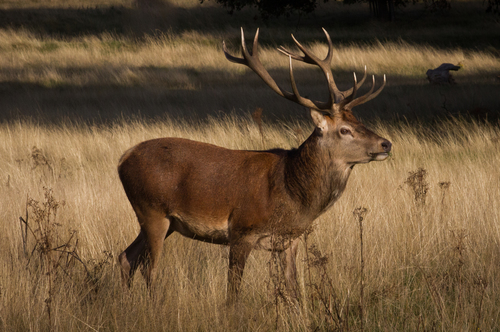
Red Deer
Cervus elaphus
The Red Deer is the undisputed monarch of the glen, a powerful and ancient species that brings a sense of wild majesty to any landscape. From the massive antlers of the stags to the graceful herds of hinds, they are a premier subject for any trail camera enthusiast.
Quick Identification
Size
Height at shoulder 105-137 cm (41-54 in); Weight 160-240 kg (350-530 lbs) for stags, 120-170 kg (260-370 lbs) for hinds
Colors
Reddish-brown summer coat turning grey-brown in winter; creamy-buff rump patch; stags have darker manes
Key Features
- Large branching antlers on males with multiple tines
- Buff-colored rump patch with a short tail
- Sturdy, powerful build with a long, slender neck
- Distinctive 'bell-like' roar during the mating season
When You’ll See Them
Behavior
Red Deer are highly social mammals, typically organized into single-sex herds. Hinds (females) live in stable groups led by a dominant matriarch, accompanied by their calves and yearlings. Stags (males) live in separate bachelor groups for most of the year, only seeking out the hinds during the 'rut'—the autumn breeding season. During this time, the quiet of the forest is broken by the deep, resonant roaring of stags as they compete for dominance and the right to mate.
These deer are primarily crepuscular, meaning they are most active during the twilight hours of dawn and dusk. They spend a significant portion of their day 'ruminating' or chewing the cud in the safety of dense cover. While they are naturally shy and wary of humans, they can become remarkably bold in areas where they are protected, often venturing into gardens or parklands to forage. They are excellent swimmers and can cover vast distances when migrating between summer and winter feeding grounds.
EverydayEarth exclusive
Camera Tips
To capture the full majesty of a Red Deer stag, camera placement is everything. Because they are significantly taller than most backyard wildlife, mount your camera at least 4 to 5 feet high and angle it slightly downward. If you place the camera too low, you’ll likely only capture legs and bellies. Look for 'game trails'—well-worn paths through the grass or woods—and set your camera about 10-15 feet back from the trail to ensure the wide-angle lens captures the entire animal, including the antlers.
During the autumn rut (September and October), focus your efforts on 'wallows.' These are muddy depressions in the ground where stags roll to coat themselves in scent. A camera positioned near a active wallow or a 'rubbing tree' (where stags scrape their antlers against the bark) is a goldmine for dramatic, high-energy footage. Use a fast trigger speed (0.3s or less) if your camera supports it, as Red Deer move with a surprisingly long and quick stride.
Video mode is highly recommended for this species. A 20-30 second clip will capture the social dynamics of a herd or the vocalizations of a stag, which are far more impressive than a still image. If your camera has a 'Hybrid' mode, use it to get a high-resolution photo followed by a video. Red Deer have a very keen sense of smell; always wear gloves when handling your camera and try to approach the site from downwind to avoid leaving a scent trail that might spook them for days.
For night captures, ensure your camera uses 'No-Glow' or 'Black' IR LEDs. While Red Deer are less sensitive to light than some predators, a visible red glow from a standard IR camera can sometimes make them curious or uneasy, leading them to stare directly into the lens or avoid the area. In the winter, place your cameras near evergreen cover or supplemental food sources where legal, as they will be more desperate for calories and less cautious about where they wander.
Similar Species
Species that look similar or are commonly confused with Red Deer.
Frequently Asked Questions
Record Red Deer at your habitat
Connect a camera to start building your own species record — AI identifies every visitor automatically.