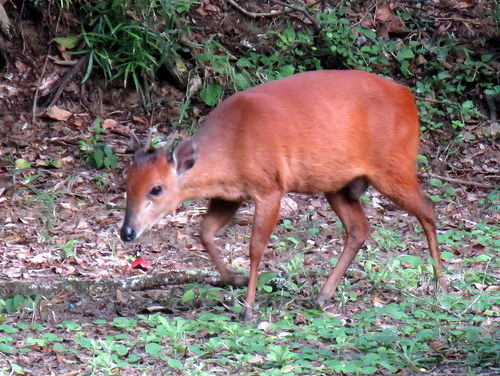
Red Forest Duiker
Cephalophorus natalensis
A vibrant splash of crimson in the forest shadows, the Red Forest Duiker is a master of the thicket. Known for its shy nature and distinctive arched silhouette, this small antelope is a rewarding discovery for any backyard camera enthusiast.
Quick Identification
Size
Shoulder height: 40-45 cm (16-18 in); Weight: 12-15 kg (26-33 lbs); Total length: 75-100 cm (30-40 in)
Colors
Rich chestnut or reddish-brown coat; lighter underbelly and throat; bridge of the nose is typically dark brown or black; tail has a distinct white tuft at the end
Key Features
- Bright reddish-orange coat
- Short, straight horns (about 6-7 cm) present in both sexes
- Highly arched back with hindquarters taller than the shoulders
- Prominent tuft of hair between the horns
When You’ll See Them
Behavior
The Red Forest Duiker is a shy, secretive antelope that lives a largely solitary life within the dense cover of evergreen forests. They are intensely territorial, with both males and females maintaining small home ranges that they defend against intruders. You will often see them using the large preorbital glands located just below their eyes to rub scent onto twigs and branches, marking the boundaries of their kingdom.
These animals are famous for their cautious nature. The name 'duiker' comes from the Afrikaans word for 'diver,' describing their habit of plunging into the thickest brush at the slightest hint of danger. In areas where they feel safe, such as quiet suburban gardens bordering nature reserves, they can become quite sedentary, sticking to a predictable routine and following the same narrow paths through the undergrowth day after day.
EverydayEarth exclusive
Camera Tips
To capture the Red Forest Duiker, camera height is the most critical factor. Because these are small, low-slung animals, your camera should be mounted no higher than 12 to 18 inches (30-45 cm) off the ground. Angle the lens slightly downward to ensure you catch the legs and face, as a camera mounted at human waist-height will likely only capture the top of the animal's arched back or miss it entirely.
Focus your efforts on 'wildlife tunnels'—those narrow, arched openings in dense hedges or forest edges. Red Forest Duikers are creatures of habit and will use these exact same corridors every morning and evening. Look for areas with cleared leaf litter or small, sharp hoof prints. If you have a fruiting tree in your yard, such as a Wild Plum, Fig, or even a domestic guava, aim your camera at the ground beneath the canopy. They will often spend several minutes foraging for fallen fruit in these spots, providing excellent opportunities for clear, still shots.
Because of their nervous temperament, use a 'No-Glow' or 'Black Flash' infrared camera. Standard 'Low-Glow' LEDs can emit a faint red light that may spook a duiker, causing it to 'dive' and leave you with a blurry photo of a disappearing tail. Set your trigger speed to the fastest possible setting (0.2s - 0.3s is ideal). These animals move with a quick, jerky rhythm and don't stay still for long unless they are eating.
Video mode is particularly rewarding for this species. A 15-second clip can capture the fascinating social behavior of scent-marking or the way they flick their white-tipped tails to signal to a mate. If you are placing a camera in a garden, try to choose a spot with soft, dappled sunlight; the Red Duiker’s vibrant chestnut coat looks spectacular in natural morning light, but can appear 'blown out' in direct, harsh midday sun.
Similar Species
Species that look similar or are commonly confused with Red Forest Duiker.
Frequently Asked Questions
Record Red Forest Duiker at your habitat
Connect a camera to start building your own species record — AI identifies every visitor automatically.