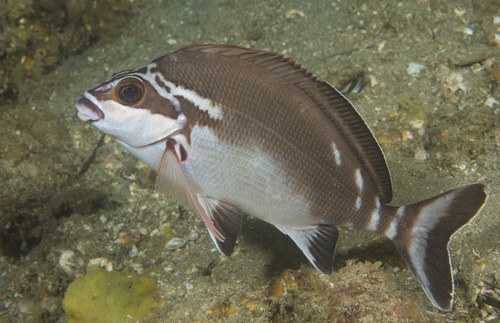
Red Morwong
Morwong fuscus
The Red Morwong is a colorful icon of the southern Pacific reefs, easily recognized by its vibrant orange hue and its quirky habit of 'standing' on its fins. A favorite for underwater photographers, this sedentary reef-dweller brings a splash of color to every coastal kelp forest.
Quick Identification
Size
30 to 60 cm (12 to 24 inches) in length; typically weighs between 1 and 3 kg (2.2 to 6.6 lbs).
Colors
Distinctive reddish-brown to bright orange-brown body; paler underbelly; fins often match the body color with slightly darker edges.
Key Features
- Deep, compressed body shape
- Large, fleshy 'pouty' lips
- Thickened lower pectoral fin rays used for resting on rocks
- Small, pointed snout with a steep forehead profile
When You’ll See Them
Behavior
Red Morwongs are the 'homebodies' of the rocky reef. Unlike many fish that swim constantly to maintain position, these clever creatures use their specialized, thickened pectoral fins to prop themselves up on the seabed, looking very much like they are standing on the reef. They are generally solitary and highly territorial, often returning to the same rocky crevice or 'bunk' every night to sleep.
During the day, they are relatively approachable for divers and underwater cameras, moving with a calm, deliberate pace. They spend the majority of their time vacuuming the substrate for food. While they aren't schooling fish, you may occasionally see small groups congregating in areas with high oxygen levels or abundant food sources, though they quickly return to their individual patches of reef.
EverydayEarth exclusive
Camera Tips
To capture the best footage of a Red Morwong, your camera needs to be positioned low. Because these fish spend most of their time 'perched' on the reef rather than swimming high in the water column, a camera mounted 15-30 cm (6-12 inches) above the substrate will give you a stunning eye-level perspective. Look for 'gutters' or flat rocky ledges within kelp forests, as these are their favorite resting spots.
Red Morwongs are naturally curious but can be spooked by rapid movement. If you are using an underwater housing with an external battery pack, ensure all cables are tucked away; they have been known to nip at loose items to see if they are edible. For the best color reproduction, ensure your camera is set to a 'Underwater' or 'Diving' white balance mode, or use a red filter. Without this, their brilliant orange-red hues will look muddy and brown at depths below 5 meters.
While they don't respond to traditional bread-based baits, they are highly attracted to the scent of crushed sea urchins or opened mollusks. Placing a small amount of crushed bait directly in front of the camera lens can encourage them to come in for a 'close-up' where you can see their unique lip structure in action. Early afternoon light is ideal, as the sun penetrates the shallow reef and highlights the metallic sheen of their scales.
Check your camera's frame rate; since Morwongs move slowly and then dart suddenly when threatened, a higher frame rate (60fps) is recommended. This allows you to slow down the footage to observe the delicate way they use their pectoral fins to 'walk' across the rocks.
Similar Species
Species that look similar or are commonly confused with Red Morwong.
Frequently Asked Questions
Record Red Morwong at your habitat
Connect a camera to start building your own species record — AI identifies every visitor automatically.