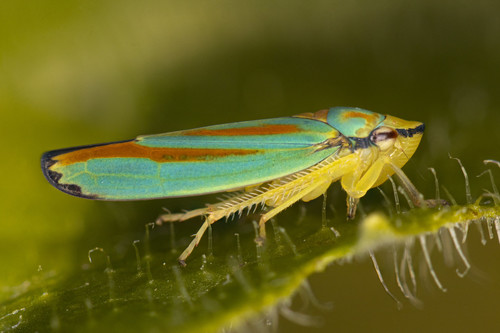
Rhododendron Leafhopper
Graphocephala fennahi
Decked out in neon turquoise and racing stripes, the Rhododendron Leafhopper is a tiny gem of the garden. This agile jumper is a master of disguise and a delight for backyard naturalists with a keen eye for detail.
Quick Identification
Size
8-10 mm (0.3-0.4 inches) in length
Colors
Bright turquoise or teal body with striking diagonal red-orange stripes on the wings; the face and underside are typically yellow or pale green.
Key Features
- Vivid orange-red diagonal stripes on wings
- Wedge-shaped turquoise body
- Strong hind legs for explosive jumping
- Yellowish-green underside and head
When You’ll See Them
Behavior
The Rhododendron Leafhopper is a masterpiece of miniature engineering. Primarily known for its vibrant colors, this insect is also a master of the 'lateral sidestep.' When they sense a person or predator approaching, they will quickly scuttle to the opposite side of a leaf or stem, using the plant as a shield. This 'peek-a-boo' behavior makes them a fun challenge to spot and photograph.
These insects are highly social in their environment, often found in large groups on the undersides of leaves during the heat of the day. They are famous for their incredible jumping ability; when startled, they use their powerful hind legs to launch themselves into the air with such speed that they seem to vanish instantly. While they are beautiful to look at, they are also known for their role in the garden ecosystem as they lay eggs in the buds of rhododendrons, which can sometimes facilitate the spread of certain fungi.
EverydayEarth exclusive
Camera Tips
To capture the Rhododendron Leafhopper, your camera setup needs to focus on the 'macro' world. Because these insects are less than half an inch long, a standard trail camera may struggle unless it has a dedicated macro lens or is positioned very close to a specific leaf. Mounting your camera on a flexible tripod and aiming it at a cluster of sun-drenched rhododendron leaves is the best starting point. Look for leaves with white 'speckling' or stippling, which indicates recent feeding activity and suggests the leafhoppers are nearby.
Lighting is your best friend when filming these insects. Their iridescent turquoise and red markings look most spectacular in bright, filtered sunlight. Avoid deep shade, as the camera's sensor will struggle to pick up the fine details of their wing patterns. If your AI camera has a high-frame-rate setting, use it; these insects move with lightning speed, and a higher frame rate will allow you to see their incredible 'take-off' jumps in slow motion.
Since they are highly sensitive to movement, avoid placing the camera in a way that requires you to frequently adjust it. Set it and leave it for several hours. You can even 'bait' an area for photography by ensuring your rhododendron is well-watered, as the insects prefer plants with high sap pressure. Late August and September are the 'golden months' for activity, as the adult population is most abundant and active during this window.
Frequently Asked Questions
Record Rhododendron Leafhopper at your habitat
Connect a camera to start building your own species record — AI identifies every visitor automatically.