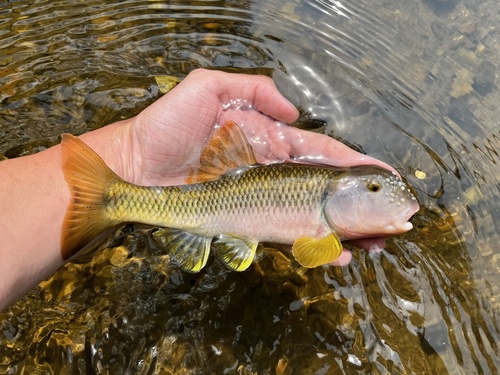
River Chub
Nocomis micropogon
Known as the tireless architect of North American streams, the River Chub builds massive underwater stone mounds that serve as bustling neighborhoods for entire aquatic communities.
Quick Identification
Size
4 to 9 inches (10–23 cm) in length; large males can reach up to 12 inches (30 cm). Weight typically ranges from 2 to 8 ounces (50–225 g).
Colors
Olive-brown to bronze on the back, fading to silvery-gold sides and a white or cream belly. Breeding males develop a rosy-pink flush on their underside and prominent white bumps called tubercles on their heads.
Key Features
- Large, blunt head with a tiny barbel at the corner of the mouth
- Mound-shaped stone nests that can reach 3 feet in diameter
- Large, dark-edged scales giving a cross-hatched appearance
- Small, dark spot at the base of the tail fin in juveniles
When You’ll See Them
Behavior
The River Chub is often called the 'architect of the stream' due to its remarkable nest-building behavior. During the spring, males work tirelessly to move hundreds of stones with their mouths, piling them into large mounds that can be several feet wide. This isn't just a home for their own eggs; the River Chub is a keystone species because its nests provide essential spawning grounds for many other fish species, such as shiners and dace, which are known as 'nest associates.'
These fish are generally peaceful but can be quite active and territorial around their nesting sites. In the social hierarchy of the stream, the largest males dominate the best nesting spots. While they are wary of sudden movements from humans or predators above the water, they are relatively bold underwater, focused intently on their constant search for food or the maintenance of their stone piles.
EverydayEarth exclusive
Camera Tips
Capturing the River Chub requires an underwater approach, as standard trail cameras won't see through the surface glare of a moving stream. Use an action camera with a waterproof housing, like a GoPro, and secure it to a weighted base or a small diving tripod. Place the camera in a shallow run (6–18 inches deep) near a visible mound of stones. These mounds are easy to spot in late spring as they look like unnaturally clean piles of gravel amidst the siltier stream bed.
For the best results, position your camera at a low angle, roughly 2-3 feet away from the nest mound, facing slightly upstream. This allows the natural current to keep the lens clear of debris while capturing the 'side-profile' action of the male chub carrying stones in his mouth. Since these fish are active during the day, aim for a sunny afternoon when light penetrates the water most effectively. A high frame rate (60fps or higher) is recommended to capture the quick, jerky movements of the fish as they dart in and out of the nest area.
If you prefer to keep your gear dry, you can use a high-quality bridge camera or DSLR from a riverbank or bridge overlook. To make this work, a circular polarizing filter is mandatory; it cuts through the water's surface reflection, allowing you to see the chub working on their nests below. Use a fast shutter speed (at least 1/500s) to freeze the motion of the water and the fish.
Patience is key. Once you place an underwater camera, the fish will likely hide for 10–15 minutes. Retreat to the bank and wait; once they realize the 'new rock' isn't a threat, they will return to their frantic nesting or foraging activity, providing you with incredible close-up footage of their industrious lives.
Similar Species
Species that look similar or are commonly confused with River Chub.
Creek Chub
The Creek Chub has a distinct black spot at the base of the front of the dorsal fin and a much larger mouth.
Bluehead Chub
Found in more southern ranges; breeding males have a vibrant blue head and a distinct 'hump' behind the head.
Hornyhead Chub
Very similar but typically smaller with a more distinct red spot behind the eye in adult males.
Frequently Asked Questions
Record River Chub at your habitat
Connect a camera to start building your own species record — AI identifies every visitor automatically.