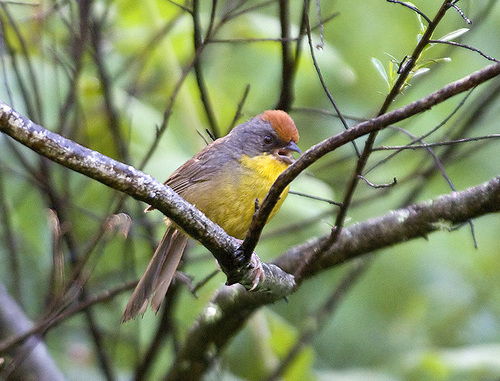
Rufous-capped Brushfinch
Atlapetes pileatus
Meet the 'jewel of the thicket'—the Rufous-capped Brushfinch. Endemic to the Mexican highlands, this striking bird brings a flash of brilliant yellow and deep chestnut to the forest floor.
Quick Identification
Size
5.7–6.5 inches (14.5–16.5 cm) in length; Weight ranges from 0.8–1.1 oz (22–32 g)
Colors
Bright rufous-chestnut crown; slate-gray face, back, and wings; brilliant yellow throat and underparts; olive-green tinges on the tail.
Key Features
- Distinctive reddish-brown (rufous) cap
- Bright yellow throat and belly
- Slate-gray face and upperparts
- Forages primarily by hopping on the ground
When You’ll See Them
Behavior
In a backyard setting, these birds are the masters of the 'low zone.' You won't often see them at hanging tube feeders; instead, they prefer to scrounge for fallen seeds or insects beneath dense shrubbery. Their movement is characterized by quick, nervous hops and frequent tail-flicking, a behavior that helps flush out small insects from the dirt and fallen leaves.
EverydayEarth exclusive
Camera Tips
Water is your best friend when it comes to attracting this species. A ground-level birdbath or a simple shallow basin with a solar-powered dripper is a magnet for brushfinches. The sound of moving water will pull them out of the thickets. Position your camera 3 to 5 feet away from the water source to ensure they fill the frame. Because they are fast-moving and prone to twitchy movements, set your camera to a fast trigger speed and use 'Burst Mode' (3-5 photos per trigger) to ensure at least one shot captures the vibrant rufous cap in focus.
In terms of bait, mealworms (live or dried) are highly effective for this insect-loving species. You can also use finely cracked corn or sunflower hearts scattered directly on the soil. Since these birds live in the shaded understory, lighting can be a challenge. If your camera has adjustable settings, try to increase the ISO or exposure slightly if the area is perpetually shaded, or use a camera with high-quality infrared LEDs for those dim early morning hours when the birds are most active. Lastly, check your camera frequently during the dry season, as this is when they are most likely to visit supplemental water and food sources regularly.
Similar Species
Species that look similar or are commonly confused with Rufous-capped Brushfinch.
Frequently Asked Questions
Record Rufous-capped Brushfinch at your habitat
Connect a camera to start building your own species record — AI identifies every visitor automatically.