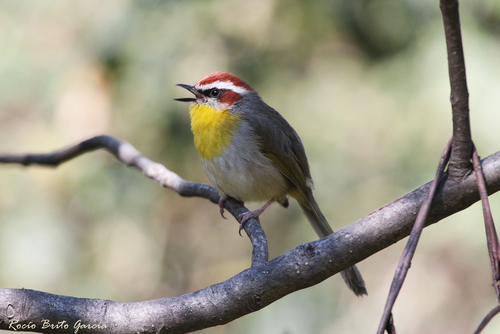
Rufous-capped Warbler
Basileuterus rufifrons
A vibrant burst of color in the brush, the Rufous-capped Warbler is a spirited songbird that brings a touch of the tropics to the canyons of the Southwest. With its fiery crown and zesty personality, it’s a prized find for any backyard observer.
Quick Identification
Size
Length: 4.7-5.1 in (12-13 cm); Weight: 0.35-0.42 oz (10-12 g); Wingspan: approx. 6.7-7.1 in (17-18 cm)
Colors
Bright rufous (reddish-brown) crown and cheek patches; prominent white eyebrow (supercilium); yellow throat and upper breast; olive-green back and wings; white belly.
Key Features
- Distinctive rusty-red cap and ear patches
- Bold white stripe above the eye
- Bright yellow throat and chest fading to a white belly
- Long, active tail often held cocked or fanned
When You’ll See Them
Behavior
The Rufous-capped Warbler is a high-energy, restless bird that spends much of its time 'skulking' through dense undergrowth and scrubby thickets. Unlike some warblers that forage high in the canopy, this species prefers the low-to-mid levels of vegetation. It is often seen in pairs or small family groups, moving with quick, jerky hops and frequently flicking its tail to flush out hidden insects.
While they can be shy and difficult to spot in thick cover, they are quite vocal. Their song is a series of sweet, accelerating chips, and they often give a sharp 'puk' call note when foraging. In the northern reaches of their range, such as Arizona, they are known for being somewhat sedentary, often staying in the same brushy canyon for months at a time, making them a favorite target for patient birdwatchers.
EverydayEarth exclusive
Camera Tips
To capture the Rufous-capped Warbler, you need to think low. These birds rarely venture into the open sky, preferring the safety of tangled vines and low branches. Mount your AI-powered camera between 1 and 3 feet off the ground, aiming it toward a natural opening in the brush or a clear 'corridor' within a thicket. Because they are constant movers, a camera with a fast trigger speed and a high-frame-rate video setting is essential to avoid capturing nothing but a blur of yellow and olive.
Water is the absolute best lure for this species. They are highly attracted to the sound of moving water, so placing your camera near a shallow, rocky birdbath with a solar dripper or a natural woodland seep will significantly increase your success rate. Ensure the water is no more than an inch deep, as these small birds prefer shallow edges for bathing and drinking.
Lighting can be a challenge in the dense habitats they frequent. Try to position your camera facing north or south to avoid the harsh shadows of the morning sun piercing through the canopy. If your camera allows for sensitivity adjustments, set it to 'High'—these birds are small and light, and their quick movements might not trigger less sensitive sensors. In the desert Southwest, focus your efforts in shaded canyons during the hottest parts of the day when birds are most likely to visit water sources.
Similar Species
Species that look similar or are commonly confused with Rufous-capped Warbler.
Golden-crowned Warbler
Features a yellow crown stripe with black borders instead of a solid rufous cap.
Common Yellowthroat
Males have a bold black 'bandit' mask and lack the rufous cap and white eyebrow.
Chestnut-capped Warbler
Very similar but found further south in South America; generally has more extensively yellow underparts.
Frequently Asked Questions
Record Rufous-capped Warbler at your habitat
Connect a camera to start building your own species record — AI identifies every visitor automatically.