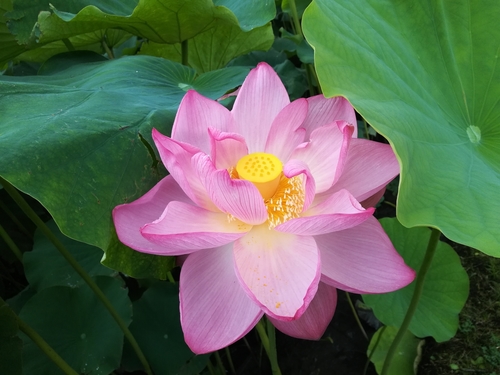
Sacred Lotus
Nelumbo nucifera
An ancient symbol of purity rising from the mud, the Sacred Lotus is a marvel of natural engineering with self-cleaning leaves and sun-mimicking blooms.
Quick Identification
Size
Leaves 24-31 inches (60-80 cm) wide; Flowers 8-12 inches (20-30 cm) wide; Heights up to 5 feet (1.5 m)
Colors
Soft pink to deep magenta or pure white petals; bright yellow central seed pod; dusty green leaves
Key Features
- Large circular leaves held high above the water surface
- Distinctive 'showerhead' shaped central seed pod
- Waxy leaves that repel water droplets
- Fragrant multi-layered flowers that open at dawn
When You’ll See Them
Behavior
The Sacred Lotus is a master of biological engineering, known for its ability to regulate the temperature of its blossoms to attract pollinators. This thermogenic property keeps the flower significantly warmer than the surrounding air, ensuring that cold-blooded insects like beetles remain active and effective at pollination even during cooler mornings. Unlike most aquatic plants that float on the surface, the lotus holds its leaves and flowers high above the water on thick, sturdy stalks.
A fascinating trait of the lotus is its self-cleaning mechanism, often called the 'lotus effect.' The leaves are covered in microscopic nanostructures that prevent water from spreading; instead, droplets roll off like mercury, picking up dirt and pathogens along the way. This ensures the plant remains pristine even when growing in stagnant or murky environments. The flowers follow a strict daily rhythm, opening in the early morning to reveal their scent and closing by mid-afternoon.
EverydayEarth exclusive
Camera Tips
Capturing the Sacred Lotus requires a different approach than fast-moving wildlife; here, time-lapse is your best tool. Set your AI-powered camera or trail cam on a steady tripod at the water’s edge, focusing on a bud that appears plump and slightly open at the tip. By setting a capture interval of one photo every 2 to 5 minutes between 6:00 AM and 11:00 AM, you can create a spectacular sequence of the petals unfurling in the morning sun.
For the most dramatic results, position your camera at a low angle, just inches above the water level, looking slightly upward toward the bloom. This perspective emphasizes the plant's impressive height and contrasts the vibrant flower against the sky. Because lotus leaves are large and catch the wind easily, be sure to set your motion sensitivity to 'low' to avoid thousands of empty triggers, or use a 'Time Lapse' mode that bypasses the motion sensor entirely during peak blooming hours.
Lighting is the most critical factor for these pale flowers. The 'golden hour' shortly after sunrise provides a soft, warm light that prevents the delicate pink or white petals from appearing overexposed. If it rains, do not pull your camera back! The 'lotus effect' is best captured during or immediately after a downpour, as the water beads into perfect silver spheres on the green leaves. A camera with a good macro or close-focus capability will allow you to capture these crystal-like droplets in high detail.
Don't stop filming once the petals fall. The transition into the seed-pod stage offers unique architectural interest and attracts various bird species and dragonflies. Keeping your camera active into the late summer and early autumn allows you to document the full life cycle of the plant and the diverse ecosystem of insects and amphibians that use the sturdy lotus leaves as hunting platforms or shelter.
Similar Species
Species that look similar or are commonly confused with Sacred Lotus.
Frequently Asked Questions
Record Sacred Lotus at your habitat
Connect a camera to start building your own species record — AI identifies every visitor automatically.