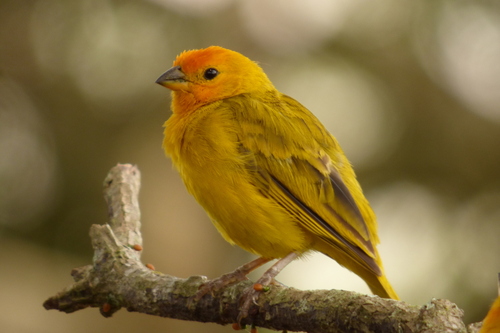
Saffron Finch
Sicalis flaveola
A burst of golden sunshine for your backyard, the Saffron Finch is a bold and musical tanager. With its fiery orange crown and cheerful disposition, it’s one of the most rewarding species to discover on your bird camera.
Quick Identification
Size
Length: 14–15 cm (5.5–6 in); Weight: 12–23 g (0.4–0.8 oz); Wingspan: 20–23 cm (8–9 in)
Colors
Adult males are bright lemon-yellow with a distinctive saffron-orange crown. Females and juveniles are duller, often grayish-olive with yellow-tinted wings and faint breast streaking.
Key Features
- Vibrant saffron-orange patch on the forehead
- Bright yellow underparts and face
- Short, thick conical beak adapted for seeds
- Pale, fleshy-colored legs
When You’ll See Them
Behavior
They spend a significant portion of their day on the ground, hopping through short grass in search of food. During the breeding season, they become notably territorial. Interestingly, they are secondary cavity nesters; rather than building their own nests from scratch, they often take over abandoned nests of other species, such as the earthen nests of the Rufous Hornero, or utilize crevices in buildings and man-made birdhouses.
EverydayEarth exclusive
Camera Tips
Offering a 'lure' is a highly effective way to bring them into frame. Scatter a mix of white proso millet and cracked corn in a concentrated area within the camera's focus zone. If you have a birdbath, this is another prime location for camera placement; Saffron Finches are frequent bathers and tend to visit water sources in small groups, which makes for excellent social interaction clips. Position the camera about 3 feet from the water's edge for the best balance of detail and field of view.
Because Saffron Finches are quick and twitchy, set your camera to a high trigger speed or use a video mode with at least 30 frames per second to avoid motion blur. In residential areas, they often visit at predictable times—usually shortly after sunrise. If you have birdhouses nearby, monitor them closely during the spring. You can often capture 'action' shots of the finches carrying nesting material or defending the cavity from rivals. Using a wide-angle lens can help capture these territorial flights, while a macro lens setup is better for identifying individual birds by the specific patterns of orange on their crowns.
Similar Species
Species that look similar or are commonly confused with Saffron Finch.
Frequently Asked Questions
Record Saffron Finch at your habitat
Connect a camera to start building your own species record — AI identifies every visitor automatically.