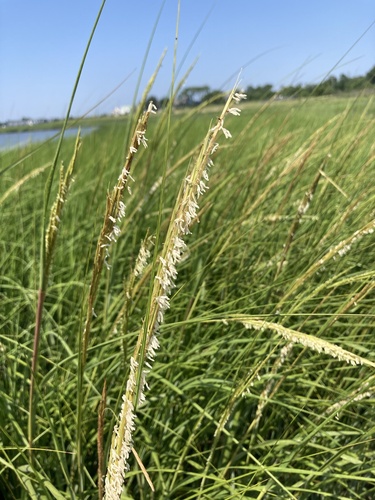
Saltmarsh Cordgrass
Sporobolus alterniflorus
The resilient foundation of the coast, Saltmarsh Cordgrass turns the harsh, salty tides into a lush, green sanctuary for wildlife. It is the essential engineer of the estuary, protecting our shorelines while sheltering a hidden world of crabs, birds, and fish.
Quick Identification
Size
Stands 1–1.5 meters (3–5 feet) tall with leaves 20–60 cm (8–24 inches) long.
Colors
Bright green to yellowish-green during summer; turns golden-brown or bronze in winter.
Key Features
- Smooth and hollow stems reaching up to 5 feet
- Sharp, tapered leaves that curve downward at the tips
- Flower spikes that produce seeds on only one side of the stalk
- Extensive underground rhizomes for colonial growth
When You’ll See Them
Behavior
Saltmarsh Cordgrass is the primary architect of the coastal intertidal zone. Unlike most plants, it has evolved to thrive in high-salinity environments, using specialized salt-secreting glands on its leaves to stay hydrated while living in seawater. It grows in dense colonies that act as a natural wave breaker, stabilizing muddy shorelines and preventing erosion during coastal storms.
This species reproduces both by seed and through an underground network of rhizomes. When these rhizomes break off, they can drift to new locations and start entirely new colonies, a process that makes the plant incredibly resilient. While it remains stationary, it is constantly interacting with the tide, providing a vertical nursery for juvenile fish and a structural sanctuary for crabs and nesting birds during the rise and fall of the ocean.
EverydayEarth exclusive
Camera Tips
To capture the true essence of Saltmarsh Cordgrass, position your camera on a sturdy stake at the edge of a tidal creek. Because this plant lives in the intertidal zone, you must be extremely mindful of the tides. Ensure your camera is mounted at least two feet above the highest predicted spring tide line to avoid water damage, or use a specialized waterproof housing if you want to capture the mesmerizing 'underwater forest' effect as the tide rolls in.
Time-lapse is your best friend when filming this species. Set your camera to take a frame every 10 to 20 minutes. This will allow you to see the grass 'breathe' as it sways with the wind and submerges and emerges with the daily tidal cycles. This movement is not just beautiful; it often reveals hidden residents like Periwinkle snails climbing the stalks or Fiddler crabs emerging from the mud at the base of the stems as the water recedes.
Lighting is crucial for plants. Use the 'Golden Hour'—the hour after sunrise or before sunset—to catch the light filtering through the thin leaves, which creates a glowing translucent effect. If your camera has a macro setting, try to capture the tiny salt crystals that form on the leaf surfaces on hot days. In the winter, the dried brown stalks provide a stark, beautiful contrast against snowy banks or blue water, making it an excellent subject for year-round observation.
Frequently Asked Questions
Record Saltmarsh Cordgrass at your habitat
Connect a camera to start building your own species record — AI identifies every visitor automatically.