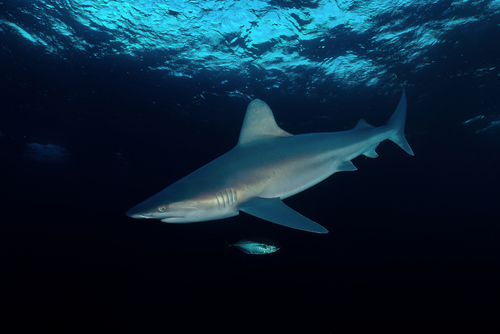
Sandbar Shark
Carcharhinus plumbeus
Defined by its towering dorsal fin and calm, steady patrol, the Sandbar Shark is the silent guardian of our coastal shallows. Often found just yards from the beach, this impressive species offers a rare glimpse into the predatory balance of our nearshore waters.
Quick Identification
Size
2 to 2.5 meters (6.5 to 8 feet) in length; weights range from 45 to 90 kg (100 to 200 lbs)
Colors
Uniformly gray to brownish-gray on the back and sides, fading to a clean white or cream underside
Key Features
- Exceptionally high, triangular first dorsal fin
- Dorsal fin origin located directly over or slightly ahead of the pectoral fin
- Prominent interdorsal ridge of skin between the two dorsal fins
- Broad, rounded snout and a stocky, heavy-set body
When You’ll See Them
Behavior
The Sandbar Shark is a migratory species known for its steady, rhythmic swimming and preference for shallow coastal environments. Unlike many of its more famous relatives, this shark is relatively docile and generally avoids interaction with humans, making it a favorite for catch-and-release researchers. They are highly social and are often found in large schools, particularly during their seasonal migrations along the continental shelf.
These sharks are bottom-oriented hunters but are capable of moving throughout the water column to pursue prey. They exhibit a slow growth rate and late maturity, which makes their populations particularly sensitive to environmental changes. In coastal areas, they frequently move into bays and estuaries to give birth, as these shallow 'nursery' grounds provide protection for their pups from larger deep-sea predators.
EverydayEarth exclusive
Camera Tips
Capturing the majestic silhouette of a Sandbar Shark requires moving your trail camera setup underwater, specifically targeting 'funnels' like tidal inlets or the deep edges of sandbars. Because these sharks are attracted to the vibrations and scent of prey, mounting your camera near a submerged structure—like a bridge piling or an oyster reef—significantly increases your chances. Use a weighted, low-profile housing to keep the camera stable against the ebb and flow of the tide, and aim the lens at a slight upward angle to catch the shark's distinctive tall dorsal fin against the ambient surface light.
Since traditional PIR motion sensors don't work underwater, you will need a camera with an 'always-on' motion detection feature that analyzes pixel changes. To trigger more frequent visits, consider placing your camera near a natural attractant, such as a mesh bag of oily fish scraps (check local regulations first). Sandbar Sharks are curious and may 'bump' the camera with their snouts to investigate its electromagnetic field, so ensure your housing is rugged and securely tethered to a heavy anchor or permanent structure to prevent it from being carried away.
Water clarity is your biggest hurdle when filming in the sandy environments these sharks love. Schedule your camera to be most active during the 'golden hours' of dawn and dusk when Sandbars are most active, but also pay attention to the tide—the 'slack' tide usually offers the clearest water for filming. If your camera uses infrared (IR) for night shots, be aware that suspended sand particles can cause 'backscatter,' looking like a blizzard in your footage. Placing your IR light source a few inches away from the lens can help clear up the image and provide a crisp view of the shark's gray skin as it glides by.
Similar Species
Species that look similar or are commonly confused with Sandbar Shark.
Sand Tiger Shark
Has two dorsal fins of almost equal size and a mouth full of visible, needle-like teeth.
Bull Shark
Lacks the interdorsal ridge and has a much shorter, broader snout compared to the Sandbar Shark.
Dusky Shark
The first dorsal fin is much smaller and begins further back on the body, well behind the pectoral fins.
Frequently Asked Questions
Record Sandbar Shark at your habitat
Connect a camera to start building your own species record — AI identifies every visitor automatically.