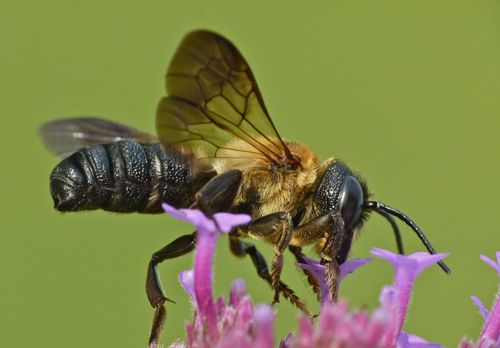
Sculptured Resin Bee
Megachile sculpturalis
An architectural marvel of the insect world, the Sculptured Resin Bee is a large, solitary pollinator known for its golden mane and its habit of using tree sap to build its nursery.
Quick Identification
Size
19 to 25 mm (0.75 to 1.0 inches) in length; roughly the size of a large bumblebee but with a more slender, cylindrical shape.
Colors
The thorax is covered in dense, golden-orange or tawny hairs. The abdomen is primarily black, shiny, and relatively hairless. Wings are dark with a smoky, brownish-purple tint.
Key Features
- Large cylindrical body shape
- Golden-brown fuzzy thorax
- Glossy black abdomen with distinct segment markings
- Dark, smoky wings
- Robust mandibles used for gathering resin
When You’ll See Them
Behavior
The Sculptured Resin Bee is a solitary species that does not live in colonies or hives. Instead, individual females take on the task of building and provisioning their own nests. They are named for their unique habit of collecting sticky tree resins, particularly from coniferous trees, which they use to seal their nesting cells and protect their larvae from predators and moisture. While they are a non-native species in many regions, having been introduced from East Asia, they have become common summer visitors to gardens across North America and Europe.
These bees are remarkably docile and are not prone to stinging unless they are being squeezed or directly threatened. They are often seen hovering around wooden structures or "bee hotels," where they utilize pre-existing holes—frequently those abandoned by Carpenter Bees—to lay their eggs. They are highly efficient fliers and can be heard from several feet away due to the deep, loud hum produced by their large bodies during flight.
EverydayEarth exclusive
Camera Tips
To capture the best footage of a Sculptured Resin Bee, your primary target should be a "bee hotel" or a wooden structure with pre-drilled holes between 8mm and 10mm in diameter. These bees are creatures of habit and will return to the same hole dozens of times a day while provisioning a nest. Mount your AI camera on a tripod or a fixed bracket just 12 to 18 inches away from the nest entrance. Angle the camera at a 45-degree offset rather than head-on; this allows you to see the bee’s long, cylindrical profile and the golden hairs on its thorax as it lands.
Lighting is critical for documenting this species because of its dark abdomen and smoky wings. Position your camera so the sun is behind the lens or hitting the nest entrance directly during the peak hours of 11 AM to 2 PM. This bright light will help the camera's sensor pick up the "sculptured" textures on the bee's exoskeleton. If your camera has a high-speed or slow-motion mode, use it. These bees move their wings rapidly, and slowing the footage down by 2x or 4x reveals the incredible mechanics of their flight and the way they use their mandibles to manipulate resin.
Because these bees are attracted to specific flowers, you can also set up a camera trap near stands of Privet or Vitex. Use a fast shutter speed setting if your camera allows it to avoid motion blur. If you are using a camera with a microphone, you will find that the Sculptured Resin Bee has a very distinct, low-frequency buzz. This audio can be a great trigger to let you know they are nearby even before they enter the frame. In late summer, keep an eye out for them on pine or cedar trees, where they can be filmed scraping resin—a rare and fascinating behavior to capture on video.
Similar Species
Species that look similar or are commonly confused with Sculptured Resin Bee.
Frequently Asked Questions
Record Sculptured Resin Bee at your habitat
Connect a camera to start building your own species record — AI identifies every visitor automatically.