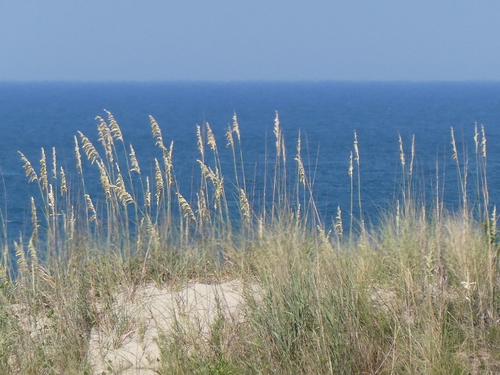
sea oats
Uniola paniculata
The iconic sentinel of the shoreline, sea oats are much more than just a pretty beach grass. These hardy plants are the master architects of the coast, holding dunes together and providing a golden backdrop for coastal wildlife.
Quick Identification
Size
Stems reach 1 to 2 meters (3 to 6 feet) in height; leaves can grow up to 60 centimeters (24 inches) long.
Colors
Pale green to silvery foliage; seed heads are green in early summer, turning to a rich golden-brown or straw color as they mature.
Key Features
- Large, flattened, drooping seed clusters resembling traditional oats
- Tall, slender stalks that sway significantly in coastal winds
- Long, narrow, tapering leaves that often curl at the tips
- Dense, mound-building growth habit at the base
When You’ll See Them
Behavior
Sea oats are the silent engineers of the coastline, playing a vital role in building and maintaining the sand dunes of the southeastern United States. Unlike animals, their "behavior" is defined by their interaction with the elements. They are incredibly salt-tolerant and thrive in the harsh, nutrient-poor environment of the beach. Their long, blade-like leaves act as a trap for wind-blown sand, which then settles at the base of the plant to create a dune. As the sand accumulates, the sea oats grow upward through it, continuing the cycle of dune formation.
Deep beneath the surface, sea oats develop an incredibly complex network of rhizomes and roots that can extend dozens of feet. This underground lattice acts like a natural rebar, anchoring the sand against the erosive forces of tropical storms and high tides. Because they are so essential for coastal protection, it is illegal in many states to pick sea oats or disturb their root systems. They also serve as a critical sanctuary for wildlife, providing nesting cover and a high-energy food source for various coastal species.
EverydayEarth exclusive
Camera Tips
When setting up an AI-powered camera to capture sea oats, your primary focus should be on the movement of the seed heads. Because sea oats are often situated in high-wind areas, you want to position your camera on a stable, weighted tripod or a deeply driven post to avoid vibration. Aim for a low-angle shot looking upward toward the seed clusters to silhouetthe them against the coastal sky. This perspective highlights the height of the stalks and the unique texture of the "oats."
Lighting is your best friend with this species. The "Golden Hour"—shortly after sunrise or before sunset—is the ideal time to capture sea oats. The low-angled sun illuminates the translucent seed heads, giving them a glowing, ethereal quality that is highly sought after in wildlife photography. If your camera allows for manual settings, use a faster shutter speed to freeze the motion of the swaying stalks in high winds, or a slower shutter speed if you want to capture a soft, artistic blur of movement.
Don't just focus on the plant itself; look for the wildlife that interacts with it. Sea oats are a favorite perch for Red-winged Blackbirds and a food source for the endangered Beach Mouse. Position your camera near a particularly dense cluster of seed heads to catch birds landing to feed. Since these plants are protected by law, ensure your equipment is placed outside of protected dune areas or on designated boardwalks to avoid trampling the fragile root systems that keep the beach intact.
Finally, consider the seasonal transition. While the plant is green in the spring, the real show starts in late summer when the seed heads turn golden. This is also when you are most likely to see insects like the Sea Oat Grasshopper or various butterflies seeking shelter among the stalks. A time-lapse setting over several weeks during late summer can beautifully illustrate the ripening of the seed heads from green to gold.
Frequently Asked Questions
Record sea oats at your habitat
Connect a camera to start building your own species record — AI identifies every visitor automatically.