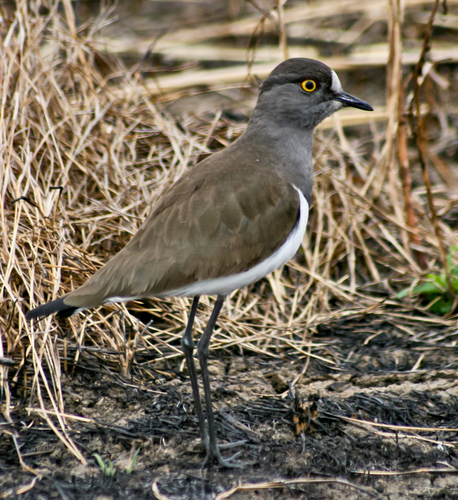
Senegal Lapwing
Vanellus lugubris
Meet the elegant Senegal Lapwing, an understated beauty of the African grasslands. With its striking white forehead and graceful 'run-and-peck' foraging style, it is a rewarding species for any backyard observer to discover.
Quick Identification
Size
Length of 22–26 cm (8.7–10.2 inches); wingspan approx 50–60 cm (20–24 inches); weight ranges from 100–140g (3.5–4.9 oz).
Colors
Olive-brown back and wings, grey head and neck, white belly and forehead patch, with a thin black band across the breast. Sexes are similar in appearance.
Key Features
- Distinctive small white patch on the forehead
- Narrow black chest band separating grey neck from white belly
- Long, dark grey-to-black legs
- Bright yellow-to-orange eyes with a dark bill
When You’ll See Them
Behavior
The Senegal Lapwing is a social and somewhat nomadic bird, often seen in small flocks or pairs rather than as solitary individuals. They are known for their graceful, almost 'tern-like' flight and a more understated personality compared to their bolder, noisier relatives like the Crowned Lapwing. While they can be vocal—emitting a high-pitched 'tyoot-tyoot' call—they are generally more elusive and prefer to stay within the safety of short-grass environments where their olive-brown plumage provides excellent camouflage.
These birds are highly terrestrial, spending the majority of their time walking or running across the ground in a characteristic 'run-and-pause' motion to startle insects. While they are primarily diurnal, they are known to be active during moonlit nights, especially in areas where human activity is higher during the day. In backyard settings, they are shy but can become accustomed to low-impact human presence if they feel their nesting or foraging grounds are secure.
EverydayEarth exclusive
Camera Tips
To capture the Senegal Lapwing on an AI-powered camera, placement is everything. These birds are strictly ground-dwellers, so your camera should be mounted no more than 30–50 cm (12–20 inches) off the ground. Aim the lens across a flat, open patch of short grass or a recently mowed lawn. Because they have a 'start-and-stop' walking style, set your camera to take multi-shot bursts or short 15-second videos to ensure you catch the moment they strike at an insect.
While they don't visit traditional bird feeders, you can attract them to your camera's field of view by maintaining a 'wild patch' of very short grass or even a patch of bare earth. They are particularly drawn to areas that have been recently disturbed or mowed, as this exposes the insects they crave. A ground-level birdbath or a very shallow water feature is also a magnet for them, especially during the drier months of the year when they need to hydrate and preen.
Since the Senegal Lapwing is often active during the 'blue hour' of dawn and dusk, ensure your camera's low-light or infrared settings are optimized. High-sensitivity PIR (Passive Infrared) settings are recommended because these birds can move quite quickly when they take flight or run after prey. If your camera supports AI tagging, look for 'Plover' or 'Shorebird' categories, as their silhouette is very similar to these groups. Seasonally, they are most predictable during the dry season when they congregate around remaining green patches of grass.
Similar Species
Species that look similar or are commonly confused with Senegal Lapwing.
Frequently Asked Questions
Record Senegal Lapwing at your habitat
Connect a camera to start building your own species record — AI identifies every visitor automatically.