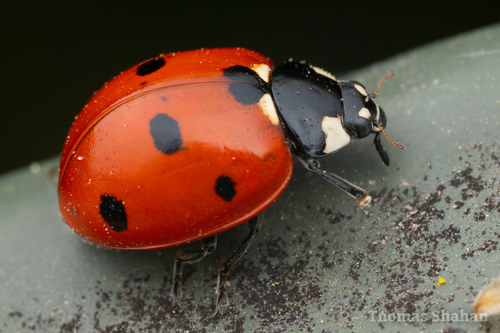
Seven-spotted Lady Beetle
Coccinella septempunctata
The iconic 'C-7' is a gardener's most colorful ally, patrolling backyard plants for pests with its striking red-and-black armor. This tiny predator is a master of biological control and a classic subject for macro wildlife photography.
Quick Identification
Size
7–12 mm (0.28–0.47 inches) in length
Colors
Bright red or orange wing covers (elytra) with seven distinct black spots; black head and thorax with two small white spots
Key Features
- Seven black spots (three on each side, one shared center spot)
- Dome-shaped, oval body
- Black pronotum with two white triangular markings
- Six short black legs
When You’ll See Them
Behavior
The Seven-spotted Lady Beetle is a highly active and mobile predator, spending much of its day patrolling leaves and stems in search of its favorite prey: aphids. Known for its reputation as a 'policeman of the garden,' it is remarkably efficient, with a single adult capable of consuming hundreds of pests per week. They are generally solitary hunters during the growing season but are known to aggregate in large numbers during the autumn as they seek out sheltered spots for hibernation.
When threatened, these beetles employ a clever defense mechanism known as 'reflex bleeding.' They excrete a bitter, foul-smelling yellow fluid from their leg joints that deters predators like birds and lizards. While they are entirely harmless to humans, this chemical signal warns others that they are not a tasty snack. They are also highly dependent on temperature, often seen basking on sun-warmed leaves to gain the energy needed for flight and hunting.
EverydayEarth exclusive
Camera Tips
To capture great footage of the Seven-spotted Lady Beetle, macro capability is essential. Because these beetles are less than half an inch long, standard trail cameras may struggle with focus. If using an AI-powered backyard camera, position it within 6 to 12 inches of aphid-rich plants like roses, milkweed, or dill. These 'aphid buffets' act as natural lures, ensuring a steady stream of lady beetle visitors. Setting your camera to a high-sensitivity trigger or using a time-lapse mode during the sunniest parts of the day is the best way to catch them in action.
Lighting is the most critical factor for showcasing their vibrant red color. Place your camera in a spot that receives direct but diffused sunlight; morning sun between 9 AM and 11 AM is ideal as it provides enough light for fast shutter speeds without the harsh shadows of midday. Try mounting your camera at 'plant height'—roughly 2 to 3 feet off the ground—and aim for a side-profile angle rather than looking straight down. This 'bug's-eye view' makes for much more compelling footage and allows the camera to see the beetle's legs and head markings clearly.
If you want to film specific behaviors like 'reflex bleeding' or wing deployment, look for calm, warm days with little wind. Wind causes leaves to shake, which can blur your macro shots or cause the beetle to hunker down. In late autumn, you can relocate your camera to south-facing stone walls, fence posts, or woodpiles. These are prime locations for 'overwintering aggregations' where you might catch dozens or even hundreds of beetles huddling together for the winter. For the best video results, use a 60fps setting if available, which allows you to slow down the footage and see the incredible mechanics of how they unfold their delicate flight wings from beneath their hard red shells.
Similar Species
Species that look similar or are commonly confused with Seven-spotted Lady Beetle.
Frequently Asked Questions
Record Seven-spotted Lady Beetle at your habitat
Connect a camera to start building your own species record — AI identifies every visitor automatically.