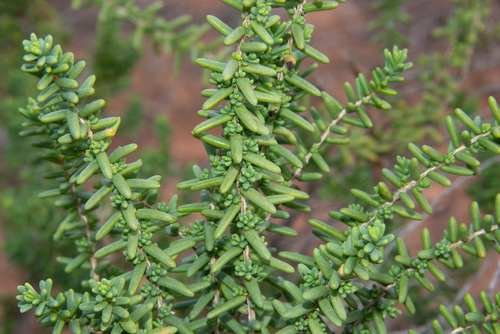
Shrubby Seablite
Suaeda vera
A resilient survivor of the salt marshes, Shrubby Seablite adds a splash of succulent green and seasonal burgundy to the world's harshest coastal environments. This woody perennial is more than just a plant; it is a vital anchor for fragile shorelines and a sanctuary for specialized seaside wildlife.
Quick Identification
Size
Height: 30–120 cm (12–47 in); Spread: 50–100 cm (20–40 in)
Colors
Glaucous grey-green to yellowish-green foliage, often turning reddish or purplish in autumn; small, inconspicuous green flowers.
Key Features
- Succulent, cylindrical grey-green leaves
- Woody, heavily branched base with a bushy upright habit
- Tiny, stalkless flowers clustered in the leaf axils
When You’ll See Them
Behavior
Shrubby Seablite is a hardy perennial shrub known for its incredible resilience in environments where most plants would perish. As a halophyte, it has evolved complex mechanisms to handle high salt concentrations, often storing salt in its succulent leaves or shedding older leaves to rid itself of excess minerals. In the wild, it acts as a foundational species, stabilizing coastal shorelines and preventing erosion with its dense, woody root systems.
While it may appear stationary, the plant undergoes a subtle visual transformation throughout the year. Its foliage can shift from a dusty glaucous green to deep hues of red and purple when exposed to high salinity or cold temperatures. It provides essential cover for ground-nesting birds and a variety of specialized coastal insects, making it a bustling hub of activity in otherwise desolate salt flats and marshes.
EverydayEarth exclusive
Camera Tips
Capturing the Shrubby Seablite on a trail camera requires a different strategy than tracking moving animals. To truly showcase its form, mount your camera on a low-profile ground stake rather than a tree. Position the lens about 12 to 18 inches off the ground to capture the intricate texture of the succulent leaves and the woody structure of the base. If your camera allows for manual focus or macro settings, this is the perfect subject to utilize them, as the tiny flowers and leaf arrangements are stunning when viewed up close.
Because Shrubby Seablite lives in open, windy habitats like salt marshes, false triggers are a common challenge. Its flexible branches can sway vigorously in coastal breezes, potentially filling your SD card with "empty" shots. To combat this, set your camera's PIR (Passive Infrared) sensitivity to 'Medium' or 'Low' and use a fast shutter speed to freeze the motion of the branches. Alternatively, leverage time-lapse mode to record one frame every hour; this creates a beautiful sequence showing the plant's growth and its striking seasonal color transitions from green to burgundy.
If your goal is to capture the wildlife that visits the Shrubby Seablite, aim your camera at a cluster of the plants during the late summer blooming period. While the flowers are small, they attract a variety of specialized pollinators and beetles. For the best lighting, position the camera to face North or South to avoid the harsh "washout" of the sun reflecting off the salty, white ground, which can easily overexpose your images during the peak midday hours.
Frequently Asked Questions
Record Shrubby Seablite at your habitat
Connect a camera to start building your own species record — AI identifies every visitor automatically.