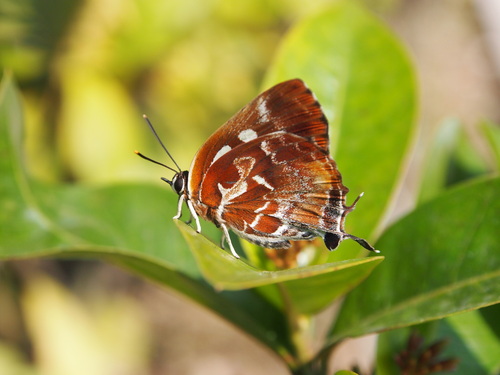
Silverstreak Blue
Iraota timoleon
A shimmering jewel of the canopy, the Silverstreak Blue combines high-speed aerial acrobatics with stunning metallic colors. Identifying this butterfly is a masterclass in nature’s camouflage, where brilliant blue hides behind jagged silver streaks.
Quick Identification
Size
Wingspan of 40-48 mm (1.5 to 1.9 inches)
Colors
Males feature a brilliant metallic deep blue upperside with broad black borders; females are a more subdued brown. Both sexes have a chocolate-brown underside marked with jagged, silver-white streaks.
Key Features
- Brilliant metallic blue upperside (males)
- Jagged, silver-white streaks on the underside of wings
- Two pairs of delicate, white-tipped tails on the hindwings
- Prominent, large eyes typical of the Lycaenid family
When You’ll See Them
Behavior
The Silverstreak Blue is a remarkably energetic and swift-flying butterfly. It is known for its territorial nature, particularly among males who select a specific leaf as a 'lookout' post. From this perch, they will aggressively chase away other males or insects that venture too close, often returning to the exact same leaf after the skirmish. This makes them surprisingly predictable for patient observers who know where to look.
When resting, the Silverstreak Blue closes its wings tightly. The intricate silver streaks on the brown underside provide excellent camouflage against tree bark and dried leaves, helping them vanish from the sight of birds and other predators. They are closely associated with Ficus trees, where they spend much of their time high in the canopy, only descending to lower levels to feed on nectar or to find suitable leaves for egg-laying.
EverydayEarth exclusive
Camera Tips
Capturing a Silverstreak Blue on a trail camera requires a strategic approach because of their small size and rapid flight. The most effective strategy is to locate their host plant—the Ficus tree. Look for trees with fresh, tender leaf growth or ripening fruit. Mount your camera on a tripod or a nearby branch, focusing on a sun-drenched cluster of leaves about 4 to 6 feet off the ground. Because these butterflies are territorial and return to the same perches, once you see one land, you have identified the perfect spot for your camera lens.
Lighting is the most critical factor for showcasing this species. To capture the 'blue' in the Silverstreak Blue, your camera needs direct sunlight to hit the metallic scales of the wings. Position your camera so the sun is behind the lens or at a slight angle. If your camera settings allow, increase the shutter speed to at least 1/500th of a second to freeze their fast wing movements. Since standard PIR motion sensors on many trail cameras may not be sensitive enough to trigger on a butterfly, we highly recommend using a 'Time Lapse' mode. Set the camera to take a photo every 5-10 seconds during their peak activity hours in the morning.
You can 'bait' an area for the Silverstreak Blue by creating a small puddling station within the camera's field of view. Place a shallow tray filled with sand and keep it moist with a mixture of water and a tiny pinch of sea salt or compost. This mimics the natural mineral seeps they visit. Place the camera at a low angle (about 12 inches from the ground) facing the damp sand to get incredible close-up shots of their under-wing silver streaks as they feed. If you are using an AI-powered camera, ensure the firmware is updated to recognize small insects to improve the accuracy of your alerts.
Similar Species
Species that look similar or are commonly confused with Silverstreak Blue.
Frequently Asked Questions
Record Silverstreak Blue at your habitat
Connect a camera to start building your own species record — AI identifies every visitor automatically.