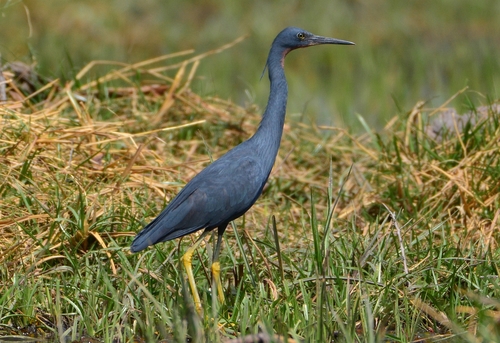
Slaty Egret
Egretta vinaceigula
Meet the shy jewel of the African floodplains. With its sophisticated slate-blue plumage and secret wine-colored throat, the Slaty Egret is a rare prize for any backyard or trail camera enthusiast in southern Africa.
Quick Identification
Size
Length: 43-60 cm (17-24 inches); Wingspan: 85-95 cm (33-37 inches); Weight: 250-340g (9-12 oz)
Colors
Deep slate-grey to charcoal body; distinct vinous (wine-red) to rufous throat and foreneck; greenish-yellow legs; black bill.
Key Features
- Small dark slate-blue plumage
- Distinctive wine-colored throat patch
- Yellow-green legs and feet
- Lacks the 'umbrella' fishing behavior of the Black Heron
- Fine, sharp black bill
When You’ll See Them
Behavior
The Slaty Egret is a refined and somewhat elusive resident of southern Africa’s seasonal floodplains. Unlike many other egret species that are bold and gregarious, the Slaty Egret tends to be more solitary or found in small, loose groups. They are highly specialized hunters, often seen delicately picking their way through shallow, vegetated waters. They are known for a 'high-stepping' walk that allows them to move through thick marsh grass without alerting their aquatic prey.
These birds are quite sensitive to their environment, making them an indicator species for the health of wetland ecosystems. Because they are classified as Vulnerable, they are often wary of human presence and will take flight if approached too closely. Observing one through a remote camera provides a rare glimpse into their quiet, methodical daily routine without causing the stress that a handheld camera or human observer might provoke.
EverydayEarth exclusive
Camera Tips
Capturing a high-quality image of the Slaty Egret requires patience and strategic placement near shallow water margins. Position your camera on a low-profile tripod or a specialized water-level mount about 6 to 12 inches above the water line. This 'low-angle' perspective creates a more intimate, professional look and helps emphasize the reflection of the bird in the water, which is a signature shot for wetland photography.
Because these birds are shy, concealment is key. Use a camera with a silent shutter if possible and ensure the housing is camouflaged with local vegetation or a drab-colored shroud. Place the camera along 'flight paths' or areas with high concentrations of small fish and dragonflies, particularly where the water is less than 4 inches deep. Avoid using artificial lures; instead, look for natural 'choke points' in the marsh where birds are forced to walk closer to your lens.
Timing is everything with the Slaty Egret. Set your camera to be most active during the 'golden hours' of shortly after sunrise and just before sunset. The low sun angle will illuminate the wine-colored throat patch—the bird's most striking feature—which can look muddy or black in the harsh midday sun. High-speed burst mode is essential; these birds strike at prey with incredible speed, and you’ll want to capture the moment the beak breaks the surface.
For technical settings, prioritize a fast shutter speed (at least 1/1000s) to freeze the motion of water droplets and the bird’s rapid movements. If your trail camera allows for video, set it to 60fps to capture the graceful, slow-motion walk and the sudden, jerky strikes. Ensure the PIR (Passive Infrared) sensor sensitivity is set to high, as these egrets move very smoothly and may not trigger less sensitive sensors at a distance.
Similar Species
Species that look similar or are commonly confused with Slaty Egret.
Frequently Asked Questions
Record Slaty Egret at your habitat
Connect a camera to start building your own species record — AI identifies every visitor automatically.