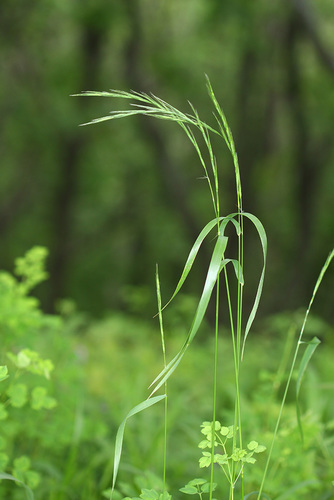
Slender wheatgrass
Elymus ciliaris
A resilient East Asian bunchgrass known for its graceful, fringed seed heads and its ability to provide essential shelter for backyard wildlife. Slender wheatgrass is a master of stabilization, holding soil and providing food in temperate meadows.
Quick Identification
Size
40–100 cm (16–40 inches) tall; leaf blades 5–20 cm long
Colors
Bright green leaves and stems; seed heads turn golden-tan or straw-colored when mature
Key Features
- Distinctly hairy (ciliate) margins on the lemmas
- Tufted, perennial bunchgrass growth habit
- Slender, upright culms (stems)
- Dense, spike-like flowering heads 10–20 cm long
When You’ll See Them
Geographic range
Where Does the Slender wheatgrass Live?
Native to the temperate and subtropical regions of East Asia, Slender wheatgrass is most frequently found across the vast landscapes of China, Japan, and the Korean Peninsula. It also extends northward into the Russian Far East and parts of Southeast Asia in higher elevations. This resilient grass thrives in transition zones where forests meet open meadows, making it a common sight in both wild and semi-rural Asian landscapes.
Basemap © OpenStreetMap contributors
Behavior
Slender wheatgrass is a hardy, perennial bunchgrass that serves as a foundational species in its ecosystem. It begins its growth cycle in early spring, emerging as vibrant green shoots that quickly develop into tall, slender stalks. Unlike sod-forming grasses that spread via underground runners, this species grows in discrete clumps, which allows space for other wildflowers to grow nearby, promoting a high level of biodiversity in its immediate vicinity.
During the mid-to-late summer, the plant produces its characteristic flowering spikes. These seed heads are a vital food source for granivorous birds and small rodents. As the seasons turn, the plant dries out but often remains standing through the winter, providing critical vertical structure and cover for insects and small mammals seeking refuge from snow and predators.
EverydayEarth exclusive
Camera Tips
To capture the life cycle of Slender wheatgrass, use a time-lapse setting on your trail camera. Position the camera on a short stake approximately 2 feet (60 cm) from the ground, pointing at a healthy clump of the grass. Set the interval to one photo every 2-4 hours to witness the dramatic transition from the first green blades of spring to the tall, golden spikes of late summer.
If your goal is to see the animals that visit the grass, place your camera much lower—about 5 inches (12 cm) from the ground—and focus on the base of the plant. Small mammals like field mice and voles often use the dense base of the bunchgrass for cover. Use a high-sensitivity motion setting, but be prepared for "false" triggers caused by the wind blowing the stalks; placing the camera in a spot slightly sheltered from the wind can help mitigate this.
For the best visual results, orient your camera so it faces North or South. This prevents the morning or evening sun from blowing out the image, allowing the delicate, hairy textures of the seed heads (the "cilia") to be visible in the frame. These fine details are often what distinguish Slender wheatgrass from other similar-looking species in high-definition captures.
Frequently Asked Questions
Record Slender wheatgrass at your habitat
Connect a camera to start building your own species record — AI identifies every visitor automatically.