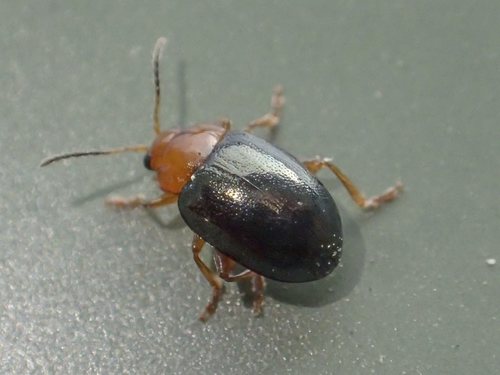
Small Blue Leaf Beetle
Nisotra breweri
A tiny jewel of the garden, the Small Blue Leaf Beetle dazzles with its metallic sheen and surprising jumping power.
Quick Identification
Size
3-5 mm (0.12-0.20 inches) in length
Colors
Brilliant metallic blue or teal elytra (wing covers), sometimes with a subtle greenish sheen; dark antennae and legs
Key Features
- Ovoid, compact body shape
- Characteristic metallic blue sheen across the entire dorsal surface
- Enlarged hind femurs adapted for jumping (flea beetle trait)
- Fine, longitudinal rows of punctures on the elytra
When You’ll See Them
Geographic range
Where Does the Small Blue Leaf Beetle Live?
Native to the Australasian region, the Small Blue Leaf Beetle is most commonly found across Northern and Eastern Australia, particularly in Queensland and New South Wales. Its range extends northward into the tropical ecosystems of Indonesia and Papua New Guinea. This species thrives in coastal and sub-coastal environments where its preferred host plants, like the Hibiscus, are abundant in both wild and cultivated settings.
Basemap © OpenStreetMap contributors
Behavior
The Small Blue Leaf Beetle is a diurnal insect known for its impressive jumping ability, a trait that earns it the classification of a 'flea beetle.' When disturbed, it uses its powerful hind legs to launch itself into the air, making it difficult for predators or curious gardeners to catch. They are most active during the warmest parts of the day, frequently seen basking on the upper surfaces of leaves before beginning to feed.
These beetles are primarily solitary but can appear in large numbers when a preferred host plant is in a period of lush growth. Their feeding pattern is distinctive, as they chew small, circular holes in leaves—a style known as 'shothole' damage. While they are considered a minor garden pest in some regions, they play a role in the local ecosystem as a food source for small birds and predatory insects.
EverydayEarth exclusive
Camera Tips
To capture the Small Blue Leaf Beetle on camera, you must focus on its host plants. Look for 'shothole' damage—small, pepper-like holes—on the leaves of Hibiscus or Sida rhombifolia. This damage is a clear indicator that the beetles are active in the area. Because these beetles are incredibly small, a standard trail camera will likely miss them; you will need a camera with macro capabilities or a dedicated backyard insect camera positioned just inches from the foliage.
Placement is key: mount your camera at the height of the mid-level leaves where the sun hits directly. These beetles are heliophilic, meaning they are attracted to sunlight and will often sit still on the top of a leaf to regulate their body temperature. Position your camera facing a cluster of healthy leaves during the mid-morning hours to catch them during their peak activity window.
Lighting is your biggest challenge and best friend. The metallic blue surface of the beetle can cause significant glare in direct sunlight. If possible, use a camera with a diffuser or set up your station in a spot that receives bright but slightly filtered light to bring out the deep teal and blue hues without blowing out the highlights. High-speed shutter settings are recommended if your camera allows, as their 'flea jump' is lightning fast and will appear as a blur on slower sensors.
Frequently Asked Questions
Record Small Blue Leaf Beetle at your habitat
Connect a camera to start building your own species record — AI identifies every visitor automatically.