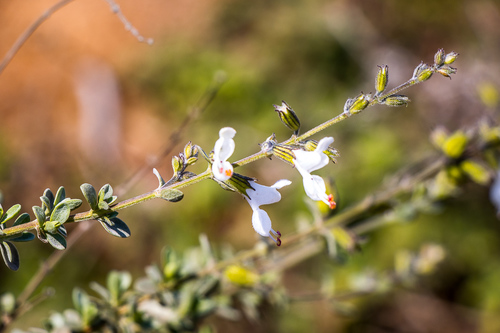
Smallflower Sagebush
Syncolostemon parviflorus
A delicate beauty of the Southern African grasslands, the Smallflower Sagebush transforms rocky slopes into a sea of soft pink and white. This resilient shrub is a magnet for pollinators, making it a star attraction for any backyard wildlife camera.
Quick Identification
Size
2-5 feet (60-150 cm) tall and 2-3 feet (60-90 cm) wide
Colors
Delicate white to pale pink or mauve flowers with bright green, serrated leaves; stems may appear reddish-brown
Key Features
- Slender spikes of small, tubular flowers
- Aromatic, hairy leaves with serrated margins
- Square-shaped stems typical of the mint family
- Upright, woody shrub growth habit
When You’ll See Them
Behavior
The Smallflower Sagebush is a resilient perennial shrub known for its graceful, airy appearance. Unlike the more common culinary sages, this species is prized primarily for its ornamental value and its ability to thrive in the mist-belt regions of Southern Africa. It acts as a foundational member of the grassland ecosystem, providing structure and shelter for smaller ground-dwelling creatures.
While it is stationary, it exhibits a 'social' life through its interactions with local fauna. During its peak blooming season, the shrub becomes a bustling hub of activity. It has evolved to present its nectar-rich flowers in a way that accommodates specific pollinators, ensuring the continued genetic diversity of its habitat. In a garden setting, it is considered low-maintenance and long-lived, often forming dense, attractive clumps over several seasons.
EverydayEarth exclusive
Camera Tips
Capturing the Smallflower Sagebush on an AI-powered camera is less about the plant itself and more about the incredible biodiversity it attracts. To get the best results, mount your camera on a tripod or a low stake about 2 to 3 feet off the ground. Angle the lens slightly downward to focus on a vibrant cluster of flower spikes. This positioning is ideal for catching the high-speed maneuvers of visiting sunbirds and butterflies.
Because the flowers are small and can sway in the breeze, your camera's motion sensors might trigger frequently. To maximize your 'hero shots,' place the camera in a spot that receives bright, filtered morning light. This highlights the delicate hairs on the stems and the translucency of the petals without the harsh shadows of the midday sun. If your camera has a 'time-lapse' feature, this is the perfect species for it; you can document the entire blooming process from bud to seed over several weeks.
For those looking to capture specific pollinators, consider the 'Macro' or 'Close-up' settings if available. Smallflower Sagebush is a favorite of hawkmoths and specialized long-tongued flies. By focusing the camera within 18-24 inches of a primary bloom, you give the AI the best chance to identify and record these fast-moving visitors. Keep the area around the base of the plant clear of tall grass to ensure the camera’s view isn't obstructed as the plant grows through the season.
Frequently Asked Questions
Record Smallflower Sagebush at your habitat
Connect a camera to start building your own species record — AI identifies every visitor automatically.