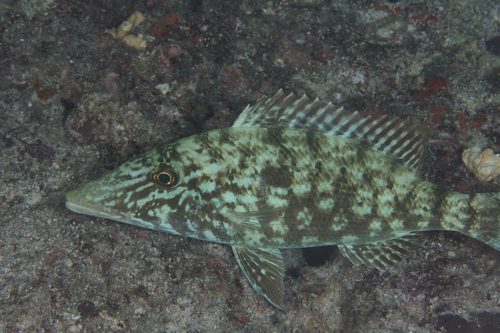
Smalltooth Emperor
Lethrinus microdon
Meet the 'Pigface Bream' of the Indo-Pacific—a long-snouted specialist of the reef floor. The Smalltooth Emperor is a master of the sandy transition zones, using its unique anatomy to find hidden treasures beneath the seabed.
Quick Identification
Size
Typically 30 to 50 cm (12 to 20 inches) in length; can reach a maximum of 70 cm (28 inches) and weigh up to 4 kg (8.8 lbs).
Colors
Olive-green to brownish body with scattered dark spots; the head is elongated and often features reddish-brown markings near the snout.
Key Features
- Distinctly elongated, pig-like snout
- Small, irregular dark spots on the scales
- Long pectoral fins often tinged with orange
- Deep-bodied profile with a continuous dorsal fin
When You’ll See Them
Geographic range
Where Does the Smalltooth Emperor Live?
The Smalltooth Emperor is native to the expansive tropical waters of the Indo-Pacific region. Its range extends from the Red Sea and the East African coast across to the Ryukyu Islands of Japan and southward to the northern Great Barrier Reef in Australia. This species is a hallmark of the Coral Triangle, with high population densities found in the waters surrounding Indonesia, the Philippines, and Papua New Guinea.
Basemap © OpenStreetMap contributors
Behavior
Smalltooth Emperors are intelligent, opportunistic predators primarily found patrolling the transition zones where coral reefs meet sandy lagoons. Unlike some of their more gregarious relatives, adults tend to be solitary or form small, loose-knit groups, while juveniles are more likely to congregate in shallower seagrass beds for protection against larger predators.
These fish are known for their inquisitive nature, often approaching stationary objects or underwater camera setups to investigate disturbances in the substrate. They spend the majority of their daylight hours foraging, using their powerful snouts to sift through sand and rubble. While they are generally wary of humans, they can become quite bold in areas where they are protected from fishing, making them excellent subjects for coastal observation.
EverydayEarth exclusive
Camera Tips
To successfully capture the Smalltooth Emperor on an underwater AI-powered camera, placement is everything. You should aim to position your camera at the edge of a reef where it meets a sandy clearing. These 'halo' zones are the primary hunting grounds for the species. Set the camera low—approximately 10 to 20 inches above the seabed—and tilt it slightly downward to record the fish as it noses into the sand to forage. This angle provides the best view of their unique facial structure and 'smalltooth' characteristics.
While the Smalltooth Emperor is naturally curious, you can encourage a closer visit by using a scent-based attractant. A mesh bag or perforated container filled with crushed shells or fish scraps, securely anchored within the camera's view, will draw them in. They are particularly attracted to the scent of crustaceans, which may lead to high-quality footage of them using their elongated snouts to investigate the source. Avoid over-baiting, as this can attract larger sharks or rays that might displace your target species.
Lighting is a significant challenge in marine environments. If your camera setup allows, use an external light source or a red filter to compensate for the loss of color at depth, especially if you are recording below 5 meters. This will bring out the olive and reddish tones on the fish's head. For the best AI detection, ensure the water clarity is high; mid-morning when the sun is directly overhead provides the best natural illumination for the camera's sensors to distinguish the fish's mottled pattern from the sandy background.
Similar Species
Species that look similar or are commonly confused with Smalltooth Emperor.
Frequently Asked Questions
Record Smalltooth Emperor at your habitat
Connect a camera to start building your own species record — AI identifies every visitor automatically.