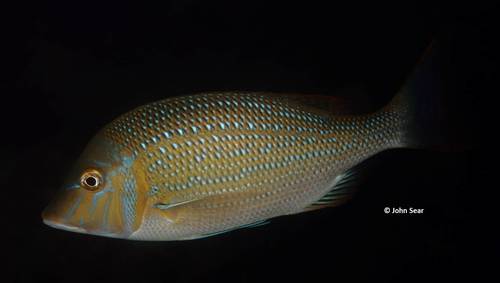
Spangled Emperor
Lethrinus nebulosus
With a body draped in shimmering blue 'spangles' and a regal presence on the reef, the Spangled Emperor is one of the Indo-Pacific's most charismatic fish. These powerful predators are the gardeners of the seafloor, constantly patrolling the sand and coral for their next meal.
Quick Identification
Size
Typically 45–50 cm (18–20 in), reaching a maximum of 80 cm (31 in) and weighing up to 8.4 kg (18.5 lbs).
Colors
Yellowish to bronze-green body with a distinctive light blue spot on each scale; face features bright blue radiating lines.
Key Features
- Iridescent light blue 'spangles' on every scale
- Electric blue streaks extending from the eyes across the snout
- Large, powerful lips and a blunt-headed profile
- Yellow to orange-tinted pectoral and pelvic fins
When You’ll See Them
Geographic range
Where Does the Spangled Emperor Live?
The Spangled Emperor is widely distributed across the warm waters of the Indo-West Pacific region. Its massive native range begins along the eastern coast of Africa and the Red Sea, stretching eastward across the Indian Ocean to the shores of Southeast Asia, including Indonesia and the Philippines. It is a prominent resident of the Great Barrier Reef in Australia and extends as far north as the subtropical waters of southern Japan.
Basemap © OpenStreetMap contributors
Behavior
The Spangled Emperor is a powerful and intelligent marine predator that exhibits changing social patterns as it matures. Juveniles are highly social, forming large, shimmering schools in shallow seagrass beds and mangrove estuaries where they find protection from larger predators. As they grow, they move toward deeper reef systems, where adults become more solitary or travel in small, loose groups. They are known to be quite curious about divers and underwater cameras, often approaching to investigate disturbances in the sand.
These fish are significant 'sand-movers' in reef ecosystems. During the day, they can be seen hovering just above the seafloor, but they become particularly active hunters during the night and at the transitional periods of dawn and dusk. They use their strong snouts to root through the substrate, often followed by smaller 'opportunistic' fish like wrasses that pick up the scraps they leave behind. In areas where they are not heavily fished, they can become quite bold and are a common sight for snorkelers in lagoon environments.
EverydayEarth exclusive
Camera Tips
To capture the Spangled Emperor on an underwater AI-powered camera, placement is everything. These fish are 'benthic' hunters, meaning they spend most of their time near the bottom. Position your camera on a flat, sandy patch immediately adjacent to a coral bommie or reef structure. Using a weighted tripod or a secure reef mount at a low angle (about 10-20 cm off the seabed) will provide a dramatic, eye-level perspective of the fish as it cruises for food. Ensure the camera is facing away from the direct sun to avoid 'flare' in the water column.
Since Spangled Emperors are attracted to movement and potential food sources, 'baiting' the area can significantly increase your capture rate. Use a mesh bait bag filled with crushed mollusks or oily fish scraps secured within the camera's field of view. The scent will draw them in from down-current. If your camera setup allows for night recording with infrared or low-light sensors, you'll capture their most intense foraging behaviors, as they are much bolder under the cover of darkness.
Timing your recording with the tides is also a professional secret. These fish often move into shallower lagoon areas on the rising tide to feed. Set your camera to record during the high-tide windows, especially if those coincide with sunrise or sunset. Because the 'spangles' on their scales are highly reflective, try to position the camera so that natural light hits the fish's side, which will trigger the AI's color-recognition algorithms more effectively than a backlit silhouette.
Similar Species
Species that look similar or are commonly confused with Spangled Emperor.
Frequently Asked Questions
Record Spangled Emperor at your habitat
Connect a camera to start building your own species record — AI identifies every visitor automatically.